Friday, January 10, 2014

WRITING A LEGACY-MEMOIR by Robert D. Sutherland

Hello, writers and book lovers!

I hope this finds you well in the first month of 2014. We're all looking forward to a healthy and happy new year, filled with lots of great books of all formats: print, eBooks, and audio books!

Following is a great piece by a good friend of MurderBy4 - Mr. Robert Sutherland. Mr. Sutherland's article on legacy-memoirs is a little longer than our usual posts, but I wanted to keep it all together instead of breaking it into parts. I hope you all agree and that this wonderful piece might inspire you to write a memoir for your descendents!

Thanks, Mr. Sutherland, for joining us today. 

Aaron Lazar
www.lazarbooks.com


-->
WRITING A LEGACY-MEMOIR
by
Robert D. Sutherland

Copyright © Robert D. Sutherland, 2012                                                                     

A legacy-memoir is an autobiographical record that one writes for one’s descendants. Other types of personal memoirs are usually written for publication, with potentially the entire reading public as their audience. Typically, they’re designed to describe or demonstrate one’s importance as a player in major events, or to provide humorous or titillating anecdote, or to explain oneself, or justify one’s actions (to “have the last word”), or (in the case of celebrities) to please one’s fans and make money. In contrast to this, the purpose of legacy-memoirs is to provide to the niche audience of the author’s descendants reference materials regarding family history, and, in so doing, acquaint subsequent generations with the life, thoughts, and experiences of a far-sighted forebear.

The value in writing such a work (besides supplying family reference material) is to give your descendants an awareness of who you were as their ancestor, an understanding of how life was lived when you were living it, information regarding what you found to be important, interpretations of major events you lived through (which they may know of only through their study of history), and reasons why they should find all of this worth knowing.

A legacy-memoir is a gift to the future, a reaching out to generations of one’s own family yet unborn, sending a message to your great-great-great grandchildren (and beyond) that you care for them, wish to participate in their lives by sharing yours, and hope thereby that they will be able to see how theirs and yours, though different, are yet similar. Your descendants are the ultimate “niche audience”: not much money to be made there! And, as you hopefully launch your gift into the void, you have no certainty that any of those descendants will ever read your words, will want to read your words, or will appreciate or have a response to your feelings if they do. A legacy-memoir is thus both an act of faith and a labor of love.

Legacy-memoirs are edited to accomplish certain specific objectives. In this, they are akin to projects in oral history, which bring skillful interviewers to people “who were there” to glean their memories, impressions, and opinions while they are still present to record them. Everyone has a lifetime of experiences, memories, stories to tell. Everyone, if so inclined, and with the time and leisure to do it, can create a legacy-memoir. If individuals can’t write it themselves, they can dictate it and have it transcribed.

An archival-quality, acid-free, print-on-paper book that can be passed on from generation to generation is a useful, permanent, and portable format to serve as default and backup (who can say what technologies will have evolved by your great-great grandchild’s day?). Magnetic tape is currently obsolescent; here in 2013, digital CD formats, and computer PDF files are available for storage and reading—but what will be the case in 2280? It will be your descendants’ responsibility to continually update the text for retrievability in the technology current to them. Your responsibility—if you wish to leave them a legacy-memoir—is to write it.

I am currently writing a legacy-memoir for my descendants. What gave me the idea to do so, and why I think it’s important to leave a personal record, is the joy and enlightenment I experienced in discovering a group of writings by my great-grandfather, Robert John Sutherland (1838-1921), of which my immediate family was unaware. These writings (a text of over 61,000 words) are currently in the possession of my second cousin, Catherine Muir Butterfield, who inherited them from her grandmother Catherine Sutherland Semple, who was Robert John’s daughter and my father’s aunt. The writings are contained in a scrapbook as a series of newspaper clippings; I borrowed this scrapbook, transcribed the clippings, and published them in 1999 as The Observations of Ulysses or, Notes by an Occasional Correspondent, being Dispatches Sent to THE EVENING STAR, a Newspaper in Dunedin, New Zealand by Robert John Sutherland, of Keokuk, Iowa from March, 1881 to January, 1883. Robert John was an astute observer, highly opinionated, well-read, and an excellent writer inclined to ironic humor. I learned much history from editing his dispatches and found him to be an interesting and engaging man.

About 1848, Robert John emigrated from Thurso, Scotland and settled in Carleton Place, Ontario, in Canada; from there he moved as a young man to northern Illinois to study; in 1861, he enlisted in the Union army to fight in the Civil War. In 1865, as an aide to Brigadier General Joseph B. West, he was present when the last Confederate generals surrendered in New Orleans. After the war he married and lived in Keokuk, Iowa for many years, working for a railroad that ultimately merged with the Rock Island line. He became an American citizen in 1886.

Some years before, his brother had moved to New Zealand in the wake of an Australian gold rush. In 1881, this brother suggested that Robert John write dispatches to the Dunedin newspaper discussing current issues and events in the United States. From 1881 to 1883 Robert John did this, using the pseudonym Ulysses; the brother sent the newspapers to Iowa as they were published, and Robert John’s dispatches wound up as clippings in his scrapbook.

My great-grandfather reported on a broad range of topics, among them American grain and wool production (with tables of statistics), the latest international trade agreements, the legal controversy over Mormon polygamy, the Chinese Exclusion Act (that terminated Chinese immigration, a law he eloquently opposed), the introduction of refrigeration for shipping meat by sea from New Zealand, the closing of the U. S. government’s program for homesteading on public lands, the assassination of President Garfield (whom he supported), the trial of Garfield’s assassin Guiteau, and his personal opinion that Garfield’s successor Chester Arthur was a political hack. He saw the building of the transcontinental Canadian Pacific Railroad as a scam perpetrated by big business interests against the Canadian people. Of Oscar Wilde’s visit to America in 1883, he said “The Southern States have Oscar Wilde this summer as a substitute for the yellow fever. He is now in Texas. From either infliction ‘Good Lord deliver us’ say I.”

As I edited the old boy’s dispatches one hundred and sixteen years after he wrote them, I found all of this fascinating. Eye-witness commentary on history unfolding! Getting to know a striking and formidable personality whose genes I carry! It was then I began to see the value of legacy-memoirs for those with interest in the past and eyes to see.

I decided to frame my legacy-memoir as a direct address to my descendants, a communication to the future from the past. This was a rhetorical choice. Anyone who undertakes to write such a memoir has to decide what to tell, how much to tell, and how to tell it. I decided to present mine as a cross-referenced mosaic, organized around general topics. I am not writing a conventional autobiography beginning as David Copperfield did in Chapter One with “I am Born”, and proceeding from there. The topics I’ve tentatively chosen (which may change as I progress) are as follows:

FOREWORD (direct address: introducing myself to my descendants and                                         explaining my hopes and intentions)
CHRONOLOGY (timeline of significant life-events with historical context)
FAMILY (brief genealogical summary; description of my immediate family)
EDUCATION
READING
PHILOSOPHY
WORKING (jobs, training)
TEACHING (professional career)
WRITING
EDITING AND PUBLISHING
ARTWORK
MUSIC
CONCERNS
SOCIAL ACTIVISM
POLITICS
AMUSING INCIDENTS
PEOPLE
TRAVEL
SUCCESSES AND FAILURES
HOBBIES
PARENTING
THOUGHTS ON AGING
CONCLUSION (a summing up and wishing my descendants well)

Each of these topics will be treated in its own section, and each section will be free-standing, able to be read for itself. I conceive people reading in the memoir, not through it from beginning to end: picking, choosing, dipping at will. I’ll cross-reference between sections where appropriate.

So far, I have drafted the FOREWORD and am currently halfway through the sections on EDUCATION and WORKING; in both of these I am proceeding chronologically since both are developmental, earlier experiences providing a foundation for later. But not all sections will follow this model: I can see PARENTING, READING, PHILOSOPHY, CONCERNS, and SOCIAL ACTIVISM having their own topical subcategories.  Some sections of the legacy-memoir will be relatively long, some relatively short. Part of the fun is figuring out how to structure the sections. All persons who write legacy-memoirs must determine what they wish to say (choosing what to include, what to omit), how they wish to say it, and how to structure their presentation. There is not a single way to write a legacy-memoir.

However, there are certain things one should consider and keep in mind. Paramount is knowing what needs to be included. Since you are writing to be read in the indefinite future, you must anticipate what your descendants might not know or realize about the time in which you lived, and supply the background, context, and factual information they need in order to understand what you are saying. Facts regarding culture, politics, the natural environment, law and governmental process, means of transportation (cars and highways, trains, airplanes), the energy supply, communications (newspapers, radio, TV, DVD’s, e-mail), etc. that are self-evident to you and taken for granted, may not be at all self-evident to people living two hundred years from now; may be only vaguely understood, or altogether unknown. You must second-guess what those readers might need to have explained or described, and supply that information. (For example, whenever I cite a measurement of length, or weight, or volume, I use the English system (foot, pound, etc.), but always include as a parenthetical a conversion to metric (centimeter, meter, gram, etc.): the English system may still be used a hundred and fifty years from now—but that’s not something one should assume.)

It’s also important for you to try to guess what kinds of things your descendants might want to know or would find informative and interesting about you, your world, your life, your values and opinions, your activities, and your socio/political environment and be sure to supply that information. You have to guess what questions they might like to ask you, and then provide answers to those questions.

You’ve got to remember that you are reporting an “eyewitness” account from what, for them, is a time long past. It’s important to be honest, accurate, clear. (Opaqueness, vagueness, and ambiguity should be avoided, and remedied in your editing.)

Your personal history can be told anecdotally, as vignettes (humorous or grave) and short-short stories within the larger text. Everyone’s style is different. But it’s crucial that your account of what you’ve done, and where you’ve been, and what you’ve thought about it be interesting, informative, and fun to read.

Writing a legacy-memoir entails a lot of work. In the process, you’ll learn much about yourself, recall a great deal that you’ve “forgotten”, and gain new perspectives on what you’ve seen and done.

How many copies of the memoir should you make? A good question. At least one copy for each of your children, at least one copy for each of your grandchildren (present and projected)—and probably at least three each in addition that they can pass on to their children. Potentially burdening your offspring with multiple copies to supply to their offspring argues the need for an alternative plan of storing text through electronic means (continually updated to keep pace with evolving technology). Electronic storage will allow additional copies to be made by each generation as needed.

Also, you might wish to send a copy to the historical society or societies of the region(s) in which you did the bulk of your living. The archivists there might be happy to have your memoir in their collections.
Some of your descendants may be grateful to you for having thought of them, happy to have made your acquaintance, glad to have an accurate and coherent account of what preceded them. Hopefully they will be empowered by your gift to better understand their own experiences and to better manage their own thoughts, actions, and relations to the world.

***


Robert D. Sutherland taught courses in Linguistics and Creative Writing at Illinois State University in Normal, Illinois until his retirement in 1992. He particularly enjoyed teaching Descriptive Linguistics, History of the English Language, Semantic Theory, and Old English. In 1977, he and his co-editor James R. Scrimgeour founded Pikestaff Publications, a not-for-profit literary press that published The Pikestaff Forum, a literary magazine, until 1996. He continues serving as editor at The Pikestaff Press, which publishes books of poetry and prose fiction. In 2009 he began a blog for writers and readers of mysteries. He and his wife Marilyn have traveled widely, reared two sons to adulthood, and worked to promote peace, social justice, and preservation of the natural environment. His publications include a scholarly book, LANGUAGE AND LEWIS CARROLL; a novel, STICKLEWORTAND FEVERFEW (containing 74 of his pencil illustrations), which received the 1981 Friends of American Writers Juvenile Book Merit Award for author/illustrator; a second novel, THE FARRINGFORD CADENZA; short fiction, poems, and essays on literature, education, and publishing. His interests include classical music, the nature of metaphor, reading, travel, film noir, and the comparative study of mythologies.


Robert D. Sutherland


Author of   

Sticklewort and Feverfew: a novel for children, adolescents, and adults  

The Farringford Cadenza. A Novel
        

both available from The Pikestaff Press

http://www.pikestaffpress.com      

Thursday, January 9, 2014

Ride the carousel!


Currently gearing up for a new season of radio shows and books coming out...recycling an old article here... enjoy! 
kim
----------------------------------------------------------------------------


Writing a story, whether short or long is like a carousel ride.
copyright Kim Smith

The exciting calliope calls to you to be a part of the magic. It tugs and pulls until you throw caution to the wind and get on board. Sometimes you have to pay to get your moment on the ride, sometimes with fortune smiling, the ride is free.

Some people approach the carousel with trepidation, as it can be tricky to get onto the platform if you don’t watch your step. Some people never try; content to sit on the outside of the experience and watch. But for those who do, the world looks a bit different.

Inside the carousel are painted animals. Horses, rabbits, cats or pigs, each one is different from the rest, with intricate factors about its design and history. Some are dark, some are light, but all are interesting and beautiful. If you are new to carousels you may find staying on the animals is difficult as the seat is hard, uncomfortable, and sometimes not working.

Around you people climb atop the animals. They hold onto them with clutching fingers and laugh or cry, as the ride begins to move. The upward movement is exciting, and the rider goes with it all the way, and then back down again until the end.

The riders talk to you with accents and diction each unlike the last. The trick is to develop a friendship with them and be interested in their story because if you don’t, they soon will be gone.
You listen to the riders and notice every so often, one of them will stretch out and attempt to grab something zipping by. It’s a brass ring, and if they catch it, at the end of the ride, they receive a prize.

What does this have to do with writing you ask?

The ride’s motion is a successful story idea. Usually coming around on a regular schedule, some story ideas are long and some of them short. Oftentimes it’s the shorter ones writers have the most trouble with. Story ideas can be tricky, and many approach the process with trepidation, but eventually they get to the place where they can see their way.

Inside the story, the writer sees a plot, a painted animal. Each is special, beautiful and different, comedic or dramatic, with possibilities to be explored. Sometimes finding the plot is hard, just like the animal’s seat, and can be frustratingly difficult to stay with when they don’t work.

The carousel riders are the characters. They breathe and move, speak and tell stories of their lives. They want to tell a writer their stories and do so in differing voices, with accents and diction, which make them unique.

Finally, the brass ring would be publication. For some, it remains outside their reach, an illusion as it zips just past their fingertips. For others, it’s a prize, hard-fought and won, to take along down life’s path until they discover another carousel to ride.

Wednesday, January 8, 2014

How Reality Enhances Fantasy

by

Dora Machado
           
Fantasy is a subversive genre, requiring the mind to bend and the imagination to flex. I love the genre's creative freedom, the opportunity to rethink, redesign and reinterpret the human experience in fresh and diverse settings, and the mysteries that magic brings to the human equation. But above all, I love realism in fantasy—the idea that even the most powerful magic is grounded to our sense of self, fueled by the choices we make, and rooted in the people we are. To me, a dose of gritty realism authenticates a story, validates my characters, and makes my worlds "real."

This is exactly what I've tried to do in my books, and my latest novel, The Curse Giver from Twilight Times Books, is no exception. The Curse Giver is about an innocent healer named Lusielle, who is betrayed and condemned to die for a crime she didn't commit. When she's about to be executed, Lusielle is rescued from the pyre by an embittered lord, doomed by a mysterious curse. You might think that Bren, Lord of Laonia, is Lusielle's savior, but he isn't. On the contrary, Bren is pledged to kill Lusielle himself, because her murder is his people's only chance at salvation. Stalked by intrigue and confounded by forbidden passion, predator and prey must band together to defeat not only the vile curse obliterating their lives, but also the curse giver who has already conjured their ends.
                                   
The quickest and most effective way of establishing a link between fantasy and reality is by connecting the story's main themes to humanity's enduring themes. The Curse Giver, for example, is inspired by our ancient, deeply rooted belief in the power of curses. You can find curses in every culture on earth. It's one of those concepts that transcends background and ethnicity and binds us to our original ancestors. It's primordial to the human experience.
           
 In more concrete ways, reality betters fantasy when it comes through in the details. Settings provide great opportunities for realism. For example, The Curse Giver's river-centered world is inspired by the great American waterways, including the Colorado River, which I have rafted often, the Mississippi River, which I've had the opportunity to explore, and the Amazon River, which has always intrigued me. Setting and landscapes offer some great opportunities for realism in fantasy and so does geography, especially when the details are vivid, concrete and deeply woven into the heart of the story.
           
But ultimately, real characters make real worlds. Realism achieves its maximum expression through the human experience as characters tackle the story. In The Curse Giver, Bren, Lord of Laonia, is a warrior. To be real, the concrete details associated with his trade have to be right. Research is fundamental. I relied on medieval primary sources to make Bren real. From his weapons to his fighting strategies, to how he thinks and acts—everything about him has to be consistent and make sense, even if he exists in a fantasy world.
           
The same is true about my heroine, Lusielle. By trade, she is a remedy mixer, an ancient occupation to the human experience. I spent a lot of time researching medieval medicine, herbalism and the historical use of healing ingredients. Lusielle's potions and ingredients—the concrete elements of her practice—make her more real to the reader, more credible and therefore more compelling as a character.
           
But beyond the details, what makes these characters real is their willingness to make choices, fail, cope, learn, adapt and change; to establish emotional connections and engage in each other's quests; to suffer loss, grief and love, just like we do in the real world.  Magic is a powerful element in fantasy. No doubt about it. And yet ultimately, what matters most is the strength within. In the end, realism in fantasy is all about connecting with the powerful reality of our own humanity.


****

Dora Machado is the award-winning author of the epic fantasy Stonewiser series and her newest novel, The Curse Giver, available from Twilight Times Books. She grew up in the Dominican Republic, where she developed a fascination for writing and a taste for Merengue. After a lifetime of straddling such compelling but different worlds, fantasy is a natural fit to her stories. She lives in Florida with her husband and three very opinionated cats.

To learn more about Dora Machado and her novels, visit her website at www.doramachado.com or contact her at Dora@doramachado.com.
For a free excerpt of The Curse Giver, visit:  http://twilighttimesbooks.comthingsTheCurseGiver_ch1.html.


Thursday, January 2, 2014

Getting started with writing


I am down sick (again!)-- not the way I intended to spend the first few days of a new year. So, anyway, recycling an article here... welcome in 2014 with a new story!

Most writers will agree that there is a period in their lives where they only ‘think' or ‘talk’ about writing. In reality, they are doing something that I call pre-writing. It is a short period of time for some writers, (a little longer for others), where they get all the things tidied up before they can actually sit down and begin writing a book.

For many, this period of time is very important in their whole process. The whole process may have a bunch of different parts, but it is in the initial time where the ideas are coming together, that prewriting phase, that I speak of as being so important in getting a book to come out of our heads and onto the page.

Here is a short list of things that can go into your prewriting time. See if you can add anything to this that is your very OWN item.

1. Reading is “FUN” damental. This old saying is still true today. If you wanna write, you gotta read. While in the prewriting stage, reading is not only a fun way to get the muse going, it is vital.

2. Think out characters and ideas. Keep a pre-book notebook with all your thoughts and ideas sketched out in living color.

3. Try out an outline. Sometimes in the pre-writing stage, it is a good idea to have a little road map to point the way.

4. Create a place to write. Give yourself a place all your own, even if it is just a corner of your laundry room. Allow yourself the privilege of going there and being alone to create.

5. Put yourself on a writing deadline. Self imposed deadlines and schedules are a great way of making yourself accountable to your writing.

6. Do your research. This is probably one of the more important parts of the pre-writing stage. No one wants to read a book filled with mistakes about simple things that can be learned from a local law enforcement department, or another easy to connect with business. Get the information you need to have that authentic voice.

7. Start out slow, and don’t rewrite anything until you finish the entire thought you are trying to put out on paper. Sometimes you can revise the idea until it no longer resembles what you set out to write. That is a bad thing. Set aside revisions and rewrites and edits until you finish a first draft.

I hope this has given some of the new or aspiring authors out there reason to realize that it is not necessary to jump straight into the actual writing of their books. Sometimes we have to ease into it. 

Wednesday, January 1, 2014

A New Year and A Blank Page

By 

Dora Machado

A new year is like a blank page to me. It feels fresh but also empty, full of possibilities and always tempting. A blank page is a new opportunity, a challenge, a commitment, a promise for fun, improvement and adventure. A blank page is the ultimate reason for writing, the writer's truest friend, a new villain—yes, of course—but the best one you've written yet.


And so, my writer friends, on behalf of all of us at MB4, we wish you lots of health, happiness and joy for the New Year, but we also wish you the most magnificent blank page that you can envision for yourself. May next year find your blank page full of awesome new stories and may the joy of writing empower your keystrokes throughout 2014 and beyond. 


Thursday, December 26, 2013

Post Christmas blues

What can we do on the Thursday after Christmas besides shop? READ! We can dive into those books we got as gifts, or those we have on our Ereaders that haven't been touched yet.


For those of you bored out of your mind now that the festivities are over...here's a little fun for you...post your answer in the comments.

Grab a book
Turn to page 26 (it is the 26th right?)
and give us the twelfth line (or the 12th and 13th since this is the 12th month and the 13th year of the 2000s)

Here is mine:
From The Well of Ascension by Brandon Sanderson
"If not for the form's persistence, she could have dismissed it--like the shape of an animal seen briefly in the clouds."

This is a great book for anyone who hasn't read it...and I hope to read the entire Mistborn series because I am enjoying it a lot.

Okay, happy Thursday y'all, give us your lines and list the book, too, so we can find out what it comes from...I am about to hop off here and try to get some more reading done!

Wednesday, December 25, 2013

A very special holiday greeting from all of us at MB4

Thank you for being part of our community of writers and readers, and thank you especially for welcoming us into your minds and hearts. We wish you lots of peace, love, health, joy and happiness, today and always. 


Sunday, December 22, 2013

Turning the Tables - Interview of Aaron Lazar by Joan H. Young

Hi, folks!

Are you all set for Christmas?

For the first time in years, I can say yes to that question! This is mostly because we decided to take seriously our new pledge to keep it simple, do mostly homemade gifts, and enjoy the company of our family rather than going into terrible debt for "things." Things aren't worth it, and although it's fun to spend money like a drunken sailor, we all decided it was time to stop the madness. So - I used my photos to create very special coffee table books for my daughters and calendars for others, featuring the Genesee Valley and my gardens. Reasonable prices (esp. on sale!) at Shutterfly, and one can really put a personal touch to the creations with text beneath each photo.

Now, on to MB4 news!

Last week I conducted an interview with a new favorite author, Joan H Young, who writes delightful cozy mysteries set beside the fictitious Dead Mule Swamp way up north. It seems we must be in sync, for before she read my request to do the interview, I received a similar request from her! She recently posted this interview with me on her blog, and I thought you might like to take a look at the interesting questions she posed.

JHY: I see in your bio that you began writing as a release of your emotions following a period of great loss in your life. I think many people will identify with that, but I'm wondering why you chose to begin writing mysteries.

APL: Joan, I have always read mysteries, and only mysteries! I’m a mystery addict, and so were my parents. The house was always full of books, and my mother and father had their noses buried in PD James, Agatha Christie, Rex Stout, and John D. MacDonald books every day. The bookcases were full of them, and I devoured them all. As a child, when the “Arrow Book Club” flyers would come out at school, I’d bring them home with a dozen books circled, and even though we didn’t have much money to spare, my parents always bought every single book for me that I’d circled! Usually they were mysteries about horses or dogs. I also would devour boxes of books my parents would bring home from auctions. Once we got a whole collection of The Hardy Boys and I was in heaven!


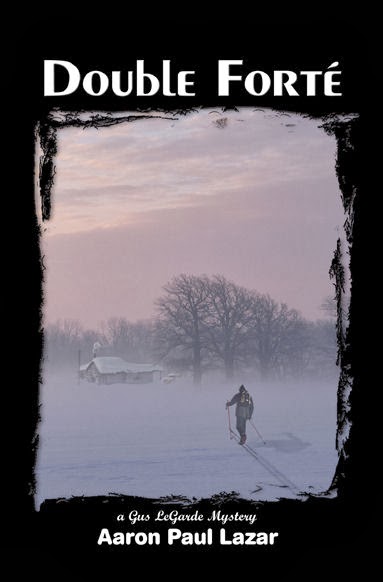
Double Forte a Gus LeGarde mystery Double Forte, book one of the Gus LeGarde mystery series
JHY: One of the things that impressed me about your writing is your ability to give the reader a unique sense of place (in Upstate New York for the Gus LeGarde mysteries). Have you always lived there?

APL: I was born in Boston, grew up in the quiet countryside nearby, and spent summers at my grandparents’ camp in Maine. Dale and I were married when I graduated from Northeastern University in 1981, and we moved to the Finger Lakes region of Upstate NY when I took my job with Kodak the same summer. We started our family here and I’ve called this place home now for 32 years, and can’t imagine living anywhere else. I also base my Moore Mysteries series right here. Tall Pines mysteries always start out on a little house on Honeoye Lake, then migrate up to the Adirondacks, another favorite place of mine.

JHY: Are there particular things you do consciously when you are describing a location for a book?

APL: No, the words just sort of pour out of me, always from real memories that bubble persistently beneath the surface. If I’ve been somewhere that I loved, it usually sticks with me. I try to migrate into my character’s head fully – and as I write I imagine what he sees, tastes, smells, hears…and hopefully my readers can enjoy the same types of images that are floating around in my brain.

JHY: I also read that you are an engineer at Kodak. How do you work full-time and still write?

APL: Oops, I need to update some of my bios that are out there! I’ve been gone from Kodak since 2009, when they laid me off along with my entire group. I’ve been happily employed at a small German company since 2010, doing engineering and customer liaisons across the seas between Germany, Thailand, and the US. I love my new job and cherish the people here.

For the Birds a Tall Pines mystery For the Birds a Tall Pines mystery (with Adirondack settings)
I’ve always worked full time and managed to put out a few books each year, and it still works. I get up early and get all my chores done, then take an hour each morning to write in the dark and quiet. Nowadays I write with my dogs near me (or on me!) beside the wood stove. It’s very peaceful. I also love writing on vacation up in the Adirondacks on a chair overlooking The Sacandaga River. Extremely peaceful and invigorating at the same time.

JHY: People don't usually think of engineers as people with great imaginations. Would you like to comment on this?

APL: When I was growing up, I didn’t want to be an engineer. First, I hoped to be a cowboy. Then, I dreamed of all of the artistic possibilities – painter, music teacher, writer, horse farm owner. Unfortunately, none of the above seemed like it would support me. So – I was surprised to find a love of physics and math (hated them in high school) when I went back to night school after starving for a while. (literally!) At that point, engineers were in huge demand, so I went for it. I was pretty good at it, but I really did love the arts first and foremost.

It was surprising to me to find many of my Kodak colleagues had the same passions! My boss was a secret painter and stained-glass window maker. A fellow engineer was a closet musician. And so on. Almost every one of these “boring and predictable” engineers was very artistic and creative. They enjoyed their work, yes. But they really shone when it came to their secret passions! I believe that stereotype before I got to know them, and discovered I was more like them than I’d expected.

JHY: How many books have you written, and in what genres?

APL: I’ve written twenty-one books, if you count my writing guides, Write Like the Wind volumes 1, 2, & 3. Three are nonfiction writing advice books, seventeen are full-length mysteries, and my newest novel— The Seacrest—is a romantic suspense. I’m now working on book twenty-two, another standalone romantic suspense.

JHY: Do you enjoy one of these more than another? Do you have a favorite of the books you have written?

APL: I love them all. Writing is writing, for me. It doesn’t matter what genre. I wrote mysteries for so long, and started writing articles/blog pieces about eight years ago. That was quite different and I enjoyed it immensely. I decided for book twenty-one that I’d branch out. I’d always wanted to write a love story. And I did it!

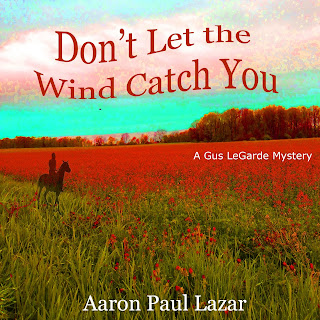
Asking about my favorite book is almost like asking me to pick a favorite child. Oh, man. Impossible. I guess if I were forced today to pick a few of my books that I might hold dear to the heart, I’d say Essentially Yours and Don’t Let the Wind Catch You, two very different mysteries.

JHY: Do you have a work in progress that you'd like to share?

APL: Yes! I’m tentatively titling this one Bittersweet Hollow, a romantic suspense set on a horse farm in Vermont. It’s about Portia Lamont, a young woman who has been missing for four years. She arrives home—thin and traumatized—to find her mother has cancer. Boone Sterling, the neighbor whose been helping her parents keep the horse farm afloat, may be the one person who can help her recover. Little by little, the family discovers the horror of what happened to Portia. It’s their love that will heal her, in the end.

JHY: Is there some other type of writing you'd like to try some day?

APL: Yes – I’d like to try a children’s story, or maybe a middle grade chapter book!

JHY: What kinds of activities do you enjoy in your free time?

APL: I love walking and photographing the hills and woods of the Genesee Valley and Finger Lakes, I’m a passionate gardener, love to read, cook, and listen to music. Oh, yeah. And I kind of enjoy writing, although it’s more of a calling than a hobby.

***

Thanks again to Joan for a fun interview, and Merry Christmas and Happy Holidays to all of our readers and friends of Murder By 4! Best wishes for a safe and happy holiday week!

Warmest regards,

Aaron Lazar
www.lazarbooks.com

Thursday, December 19, 2013

Return to Plot

Because I am deep into Christmas cookie dough, I am recycling an article. Enjoy everyone, and try to stay on the Nice List, Murderers. Readers, PLEASE-- Buy books this year!

We all plot our books differently. The ways and means are as individual as our DNA. They say there are only so many master plots in the world. But your take on any of those, well, that’s the fun stuff.

I have created a short list of questions to get the ball rolling for plotting your book. This is by no means complete, nor is it set in any sort of concrete.

1. Create the theme or story idea, what is this book about?
2. Who is telling the story?
3. Who is the supporting character(s)?
4. Are they mentors, villains, sidekicks?
5. How do they know the main character?
5. Where does the story take place?
6. What is the inciting incident?
7. What is the conflict?
8. How is this resolved?
8. How will it end?

Also, under the conflict idea, you need to know what the character wants. What is their main motivation, and why is it that they cannot have it? These are the building blocks of good conflict. A writing instructor once said, give the character two choices, sucky or suckier, and you will have a book that keeps the reader turning pages.

And you can do the plotting backwards, which is a very clever way some authors in the mystery genre start their planning out. If you already know whodunit, you can certainly figure out why, how, and when and where it happened.

Remember, a plot is just the building plan, the architectural drawing of the story. Plot, the scheme of things, is transformed by persons, places or things. Add in color, dialogue, setting, and suspense, or humor and you have a real book in your hands.

Vary the structure to fit your story’s needs, but remember there is a theme to everything. Keep your mystery mysterious, your romance romantic, and your fantasy otherworldly, or you may create confusion for the reader. They like to know that what is on the cover is within the pages, too. Sheesh. Nothing like picking up a book with a sexy guy on the front to find out he’s not a romantic interest for the heroine, but instead a sheep herder/murderer/Martian, and this is a western historical/fantasy. (kidding)

Finally, if you can tell the difference between the following two sentences, you know plot.

“The dog ate my homework.” Or “The dog ate my homework because he hates me.”

Wednesday, December 18, 2013

TRIPLE JOY - Three new releases from Twilight Times Authors Heather McLaren, Dina Von Lowenkraft, and Scott Eder!

Hi, folks.

Today I'm breaking a rule - I'm doing a straight promo for three new books. And I'm not apologizing for it, LOL.

This is a big week for print book releases from Twilight Times Books, my own illustrious publisher. I know these authors personally, and I must tell you they are genuinely delightful people, with hearts of gold and stories that will entertain young and old.

Please check out these books if you can and help our writers thrive!

One more thing - aren't these GORGEOUS covers? I'll tell ya folks,  they have set a new standard in my opinion. 

MYTHOS by Heather McLaren

Amazon--http://www.amazon.com/Mythos-Heather-McLaren/dp/1606190938/ref=Sr_1_1?s=books&i.e.=UTF8&qid=1386871946&Sr=1-1&keywords=heather+mclaren+mythos


True love was the last thing David Cooley expected to find in the Bahamas, But the moment he laid eyes on Faren Sands, he knew he had found the girl of his dreams. How could he know she was a mermaid from the lost island of Atlantis?
 
Because of the strict laws regarding human contact, the couple flees the consequences of their forbidden passion, struggling to survive a conflict that has been brewing between the mermaids and sea demons for the last eleven thousand years.

Once the epic battle begins, fate forces David to make a decision that will forever affect his young life. Should he stick by the woman he loves, risking his mortality for a civilization that hates him?

http://heathermclarenfantasy.webs.com/


AUTHOR BIO:

Heather McLaren is a Cherokee writer living in southern Illinois with her husband and four children. Mythos, the first of five books in the Mer Chronicles, is her debut novel. She is currently working on the second book in the series, Beyond Legend, and plans on bringing fantasy into the lives of young adults for years to come.


 ***
 DRAGON FIRE by Dina Von Lowenkraft

Amazon: http://www.amazon.com/Dragon-Fire-ebook/dp/B00ECNEZ6G/  
  

Some choices are hard to live with.
But some choices will kill you.

When seventeen-year-old Anna first meets Rakan in her hometown north of the Arctic Circle, she is attracted to the pulsing energy that surrounds him. Unaware that he is a shapeshifting dragon, Anna is drawn into a murderous cycle of revenge that pits Rakan and his clan against her best friend June.

Torn between his forbidden relationship with Anna, that could cost them both their lives, and restoring his family’s honor by killing June, Rakan must decide what is right. And what is worth living – or dying – for.

website: http://www.dinavonlowenkraft.com/


Born in the US, Dina has lived on 4 continents, worked as a graphic artist for television and as a consultant in the fashion industry. Somewhere between New York and Paris she picked up an MBA and a black belt – and still thinks the two are connected. Dina is currently the Regional Advisor for SCBWI Belgium, where she lives with her husband, two children, three horses and a cat.

Dina loves to create intricate worlds filled with conflict and passion. She builds her own myths while exploring issues of belonging, racism and the search for truth... after all, how can you find true love if you don’t know who you are and what you believe in? Dina’s key to developing characters is to figure out what they would be willing to die for. And then pushing them to that limit.
LINKS:

Website

***
KNIGHT OF FLAME, by Scott Eder


Amazon 


Fire. The most chaotic of the primal elements. When wielded properly by the Knight of Flame, it burns like the sun. Otherwise, it slowly consumes the Knight, burning away his control, driving him towards dark deeds. 

Stationed in Tampa, FL, Develor Quinteele, sixth Knight of Flame, waits impatiently for the predicted emergence of the last Gray Lord, his Order's ancient enemy. Hampered by a centuries-old tragedy, Dev knows of only one way to control his elemental power—rage. It broils just below his surface, waiting for the slightest provocation to set it alight.  

Anticipating Dev's transition from asset to liability, his commander assigns a young guardian, Wren, to report on Dev's actions. Torn between duty and love, Wren struggles to save her Knight; but, after a brutal attack by the Gray Lord's minions for which Dev is wrongly blamed, he's stripped of his freedom until he regains control.

With the help of his fellow Knights, can Dev regain his balance and unlock his full elemental potential in time to prevent the destruction of all life in Tampa?


Since he was a kid, Scott wanted to be an author. Through the years, fantastic tales of nobility and strife, honor and chaos dominated his thoughts. After twenty years mired in the corporate machine, he broke free to bring those stories to life.

Scott lives with his wife and two children on the west coast of Florida.


Buy Links:


Contact Links:
Twitter: @Scotteder
 
 *** 
And here's one little toot on my own horn: Don't Let the Wind Catch You is also now available in print and audio book! ;o) 

http://www.audible.com/pd/Mysteries-Thrillers/Dont-Let-the-Wind-Catch-You-Audiobook/B00H7J5HUK/ref=a_search_c4_1_1_srTtl?qid=1387274300&sr=1-1

http://www.amazon.com/Dont-Let-Wind-Catch-You/dp/1606190598/ref=sr_1_1_title_1_pap?s=books&ie=UTF8&qid=1387274245&sr=1-1&keywords=don%27t+let+the+wind+catch+you


 Merry Christmas and Happy Holidays to all!

Aaron Lazar
www.lazarbooks.com