Monday, March 14, 2011

MB4 March Critique: Cat Scratch Fever, or What?

Every second Monday of the month, your four Murderby4 hosts will get together to critique a short piece from our readers. Our first brave soul is Barb Carlson. Thanks, Barb, for sending this in!

Barb's piece was in response to this writing prompt from Gather.com: Write the last (few) paragraphs or stanzas of a story or poem that ends with the protagonist waking from a dream. Then, add dialogue or exposition (or a combination) that explains something in the plot that required the whole thing to be a dream.”

Below you'll find Barb's piece with footnotes for the comments made by Marta Stephens, Kim Smith, Ron Adams, and Aaron Lazar. We had a slight glitch with mismatched software, so even though you see a bunch of ALs in there, many of them belong to Kim Smith. You'll see that in the footnotes!

Cat Scratch Fever or What[AL1] ?

White light blinded him and he struggled to sit up. [AL2] He found he couldn't move ... he seemed to be tied down. Everywhere he looked was white[ms3] [AL4] .

Suddenly, [AL5] a humanoid figure swam into view. Long fingers with too many joints reached at him and he flinched as the cold, gray digits touched his face[AL6] .

Relax, he heard in his mind. No harm, no harm[AL7] . He screamed, as he saw the instrument in the creature's other hand. It was a long needle! No, it was a hugely [RA8] long needle! He thrashed against his bonds, and swung his head back and forth. The creature pressed its hand against his mouth, holding his head still with surprising strength.

Time after time, the instrument pricked his skin, sliding into his face impossibly far[AL9] .
His screams were muffled against the creature's hand, and he could barely breathe. Finally, suffocating, he passed out ...

And awoke with a start. He flung the cat off his face where it had apparently been kneading against his cheeks. He wiped off little pinpricks of blood from his face and looked in the mirror, breathing deeply[AL10] .

"Stupid cat!" he yelled[AL11] . "You were sleeping on my face again, you miserable feline! That's the third time in three months! Look!" He started counting the holes in his face. "Look at all these scratches! What the hell?!"

Angrily, he grabbed his work clothes, dressed quickly and stomped downstairs for some coffee. [RA12] He saw he was running late, so he rushed off to work with the coffee still in his hand.

By the time he got to work, he was much calmer, but embarrassed at the odd looks he was getting from his co-workers. Damn, am I bleeding again or something? I need to get to a mirror!

He hadn't been at his desk for more than a couple minutes when his supervisor walked in.
"So ... what happened yesterday?" she demanded[ms13] .

"Yesterday?" he said, puzzled. "What are you talking about? Yesterday was Sunday. I mowed the grass, watched the game and played video games." His brow furrowed. "Why?"
"John," she said carefully, "today is Tuesday. Yesterday was Monday. You didn't show up for work ... remember?"

He felt the blood drain from his face. "Huh?" he blinked. "It's Tuesday?"
She raised her eyebrows, "Um ... yes, it's Tuesday. What did you do? Get so drunk you blacked out?"[ms14] 

"No!" he pushed his chair back from the desk[AL15] . "No! I don't drink! Honest!" A horrible thought occurred to him ... that WAS just a dream, right? "I ... I ...," he stammered, "I have no idea." He swayed slightly, feeling dizzy. "Maybe I don't feel so good," he finished[AL16] .

Marcia frowned at him. "I think you should go see a doctor, and bring back a note saying you're fit for work. Take a couple days off if you need to, but you can't do this again." She started for the door. "Go right now and we'll talk when you get back."

John sat stunned and silent at his desk. Tuesday. It was Tuesday? How could he lose an entire day? Oh great, she wants to talk. I'm so screwed. He picked up his phone and punched in the number for the doctor’s office. They'd better not find anything implanted in my skull, or I'm going to have to kick some[ms17]  ET[RA18]  butt[AL19] [AL20]  ...


 [AL1]Kim Smith: Love the title!

 [AL2]This opening sure caught my interest!

 [ms3]Barb, since this piece was written in response to a writing prompt, I can see the challenged you faced.
A note to keep in mind though is that it’s frustrating for the reader (at least for this one) when a story doesn’t introduce the main character by name within the first couple of sentences. I want to know who the narrator is and why he/she is important enough to be in the opening paragraph.

 [AL4]Kim Smith: Would have like to see more description here about the “white.”

 [AL5]I’ve had a love/hate relationship with “suddenly.” I used to use it because how else do you describe something looming up out of nowhere, and it is a natural pattern of speech for us, right? Then I was soundly criticized for using suddenly – it was supposedly “amateurish.” So I stopped. Until a big time editor added “suddenly” back into my manuscript. LOL.

 [AL6]Kim Smith: Good!
 [AL7]It’s good that you have his inner thoughts in italics. This is correct.

 [RA8]Like Aaron I have a love hate relationship with some adverbs. I see them used all the time by the “pros”, but have had editors shred me for being lazy.  I think about alternatives every time I go to the –ly. Also, italics aren’t needed for emphasis here.

 [AL9]Kim Smith: Ouch! I flinched here :)

 [AL10]Kim Smith: Lol did NOT see this coming!

 [AL11]You might find that using an exclamation mark is sufficient. You don’t really need the “he yelled.” But be careful of using too many exclamation marks. They’re okay in dialogue to an extent, but try to avoid them in narrative at all costs. ;o) (not that you did that here, just since we’re on the topic!)

 [RA12]“Angry, he grabbed his work clothes and threw them on as he stomped down stairs for some coffee.” As an alternative

 [ms13]Let your dialogue SHOW the tone.  When you want to show emotion, use a beat instead of a tag. (i.e., “So…what happened yesterday?” Marcia tapped her nails on his desk.)  Note, the first time a character is introduced, name him/her before using pronouns. 
Also, stick to tags like “said” and “asked.”  The reader tends to skip over them.

 [ms14]Good bit of dialogue in this section.

 [AL15]“he pushed his chair back from the desk” is a great example of a ‘beat.’ You used it well here.

 [AL16]Kim Smith: Excellent twist!

 [ms17]Good start, Barb.  It would be interesting to see what you can do with this if you begin the story when he walks into his office on Tuesday. Thanks for sharing!

 [RA18]Great opening for a story, Barb. Mechanics issues aside, this sounds like it has the potential to be a great sci fi adventure. Good luck and thanks for sharing it!

 [AL19]Barb, this was a fun piece! Thanks for sharing it with us at MB4 today. I hope our comments were useful and that you enjoyed the experience. ;o)

 [AL20]Kim Smith: Love this! Very good work- would love to read more :P

Sunday, March 13, 2011

Book Review and Interview: Key Lime Squeeze by Ron Adams


Book Review/Author Interview for Key Lime Squeeze by author Ron Adams
review by Aaron Paul Lazar
 
Title:  Key Lime Squeeze
Author:  Ron Adams
Publisher: Viking Adult (May 2, 2011)
Genre: Mystery, 282 pages
Publisher: Charles River Press
ISBN number: 978-1936185290
Price: $14.95 (Paperback)
Publisher website address: www.charlesriverpress.com
Author’s personal website: www.ronaldwadams.com


I just finished reading Ron Adam’s second crime mystery, Key Lime Squeeze. Don’t you love that title? It’s evocative of the tropics and a romping good caper, all rolled into one. Not only is the title catchy, but the book is a smooth ride filled with snappy dialogue and great action.

Ron’s writing is easy to follow and the pages fly past, with no hiccups and no stuttering passages. I love his Joe Banks character, a good guy with incredible guts and a tendency to push up against the rules until they bend or sometimes break.

In contrast to Banks is Solomon, a strong dark character who scares the hell out of you in the beginning, but whose character arc practically endears him to you in the end. Nicely done, Ron!

One of the aspects of this book that hooked me was the relationship between Joe and his wife, Paula, and the few scenes with his two adorable children. I’m a sucker for family, and Ron had me caring (and seriously worried) about this family in just a few scenes.

I thought it would be fun to ask Ron some questions about this book, having freshly read it.

Ron, tell us about this series, including your first book, LAKE EFFECT, which I’m about to buy because I want to know more about Joe Banks. Does it matter in what order they are read?

RWA: Thanks for the kind words, Aaron. I truly appreciate it when another writer recognizes my work, especially one with the body of work that you have. I am writing the series to be somewhat in order, and you’ll notice things like the kids getting older and such, but each of the stories are meant to stand alone.  That way the readers can jump in and not feel lost.

Can you share a short synopsis from each book for our readers?

RWA: Sure. Lake Effect is a story about our hero, Joe Banks, being pulled into the investigation of a carjacking that ends in the murder of two small children in the icy water of Lake Erie. Being a family man himself, he is committed to finding out the who, what, and why. What he uncovers is a family buried in a blizzard of lies, deceit and greed. It is the first of the series, so of course the setting is western New York in winter. 

Key Lime Squeeze follows Buffalo P.I. Joe Banks as he answers a plea from a mob princess to locate her runaway husband, insurance executive, Robert Boothby. Saddled with the crime family's enforcer for a traveling companion, Banks tracks Boothby to the Florida Keys, and soon learns he is not the only one interested in locating the missing Insurance mogul. Allies become enemies in a cat and mouse game of murder and deceit as Banks discovers who to trust, and who's in on the squeeze.

My favorite scenes were in the Key West vicinity. I particularly enjoyed the descriptions of the area, the food, etc. I’ve never been to that part of America, and wondered how often you get to visit that area?

RWA: Truth be told it is one of my favorite locales in the United States. It is so unique, with a very special feel and rhythm to it. My wife and I have been down a couple times before our kids came along, and hope to get back again sometime soon.

I don’t want to introduce any plot spoilers here, so let me see how I can ask this question without being to specific. Referring to Janet, Boothby’s online lover: you presented a sticky situation with grace and no judgment. I admired that. Did you intend to set a good example of non-judgmental behavior here for readers, to help them understand and avoid prejudice? It was well done.

RWA: Janet was a character that when I first started was supposed to be more of a caricature, and a source of comic relief. But as I let the story develop, I let her develop more of her own humanity, and used the character as a way to show more of the makeup of Banks and Boothby. The readers can judge for themselves whether they like her or not, but I appreciate the compliment.  I didn’t set out to make the situation an object lesson, but I’m happy to hear that’s what you came away with.

You’ve lived in Buffalo for over a quarter century, right? Tell me, without getting into trouble with any bad guys, is there really an element of, er, big crime there?

RWA: On advice of counsel, I have to say that all characters depicted in this novel are fictional creations… Okay, seriously, Buffalo has always had a history of an organized crime element, like any other city of our size. Do I know specifically that there are people like the Cantolinos? No. Am I sure there is nobody in Buffalo like the Cantolinos? No.

Do you plan to take Joe anywhere exotic in the future, or will the next book be set in Buffalo? I’ll enjoy it either way. Even though I’ve lived two hours southeast of Buffalo for 28 years, I’ve never really seen the area for more than a quick drive through (or around), and it’s interesting to get your take on it!

RWA: I came to Buffalo and western New York in 1978 for school, as a freshman at Daemen College. It wasn’t exactly love at first sight, but the more I got around, the more I came to love about this area. The greatest thing about the area is the people – the finest anywhere. This is where I met my wife, and where we finally settled right on the shores of Lake Erie. It has the perfect blend of four seasons, gets less snow the most of the rest of the state, and is an absolutely passionate sports town. The architecture is beautiful in much of the area, the restaurants are amazing, and do I need to mention the Anchor Bar for wings?  There is a lot more going on here than people realize, and I could take over the rest of the interview extolling the virtues of my end of the Empire State.

Tell us what’s next!

RWA: Charles River Press is going to re-release LAKE EFFECT in e-book version sometime this fall and the papberback sometime in the spring of 2012. I am putting the finishing touches on my WIP for a third Joe Banks novel, CROSSING MIDNIGHT. I expect that will be out in the fall of 2012. I have another Joe Banks novel outlined after that, and I have promised my daughter I would seriously work on a story for her. And there’s this blogsite I’ve become involved in, maybe you’ve heard of it?

Thanks for your answers, Ron. And although of course we sadly miss our former MB4'er Sonya Bateman, we're delighted you've joined Murder by 4.  I'm sure our readers are thrilled, as well! Can't wait for Crossing Midnight to be released. 

 ***


Friday, March 11, 2011

Interview with Author Henry P. Gravelle


A few short notes – I met Henry on line a few years ago, and have been blown away by both the talent of his writing and the warmth and generosity of his spirit. Always willing to use his experience to guide other writers, he is a proud and unabashed supporter of our military veterans. His talent extends from short stories to novels to stage and now to films and TV. It is an honor to present my conversation with my Lynwood Brother, Henry Gravelle.

Thanks for joining us for this interview, Henry. We're looking forward to sharing more about your books with our readers.

Nice of you to invite me, thanks.


What was the primary inspiration for your style of crime thriller?

My Dad was a Boston cop during the times of Trigger Burke, the Brinks robbery, Machine Gun Kelley and the Boston Strangler along with numerous others. My imagination brings forth recollections from Dad’s life as a cop, coupled with my experiences working in and around Law Enforcement. Also from my personal connections with my friends, foes and situations lived through.


What's the significance of the some of the book's titles?

Titles are like covers; they have to be catchy and should show the main essence of the story or the main character. For instance, Gunner’s Rift is about a hit man named Gunner and the division, or rift, separating his police detective brother, and himself. The Igloo Boys is a group of employees who rip off their employer, a manufacturing company called The Igloo Novelty Manufacturing Company. I have just finished a novella called Apple Hill, a crime story with International flare between France and an imaginary section of Boston called Apple Hill.


Your books are full of unique characters. Are they based on someone you know or have known in real life?

Yes and no… as you know, an author cannot (knowingly) use a real person or name without permission. So through artistic license, some of my characters are based on true figures with mannerisms, looks habits etc, altered in some way. When knowing the person I model a character after it gives me a huge understanding of the character I am creating. I am able to bring him/her to life better from knowing the actual person. Even though the reader will picture someone different, the character is the person I knew and used to “form” the basis of a character.

When I need a character, my imagination will hold auditions. All kinds of characters will knock on my minds door. I check them out; maybe take certain pieces, emotions, hairstyle, eye color, clothing, and Frankenstein a complete character I am looking for. Either way they will be interesting and compatible to the story, or you will never meet them.

What does it take to come up with the suspenseful central plotline of stories? Is it difficult to maintain the intensity level throughout the story?

To come up with a plot isn’t difficult, or keeping with it. It’s unavoidable to veer from your original vision but the finished story should remain the same. As I go along, changes will occur; altering characters, settings, and conclusion but the plot remains the same.

I find the intensity level increasing slightly with each added character and sub plot. Intensity must be there to develop climax… then downhill to a satisfying conclusion for everyone, although, I love leaving doors open for possible sequels.

What kinds of responses have you gotten to your books thus far?

Those who have read my work are pleasantly surprised and become fans. One thing many notice is the smorgasbord of story types. I do not like staying in one genre; a writer will get stale, their creativity will relax if not challenged. Diversity will bring a fresh new outlook to characters and their world to present your readers.

Do you prefer to work with stand alone stories, or do you have a series the readers might want to check out?

Working a series is somewhat like I said about being stuck in one genre. I feel stagnant after a while and will try something else. But, I do have a series called “The Buddy Sands Cases.” They follow medically retired Boston police homicide detective Kevin “Buddy” Sands, assisting in on-going cases. Because of his paranormal ability, which he doesn’t like or understand, Buddy usually discovers a demon or apparition involved. I have three cases now with at least 6 on hold. I prefer to write a stand-alone tale, however much I admire Buddy.


And I also understand you are making inroads in film as well. Please share more with our readers about that.

Last October I had a part in a short film called Johnnie Taw. I had a lot of fun on the set and met a bunch of great folks. Recently I landed a role in a television pilot for a Boston crime drama called Little Boy Blue. One of my short stories, Cream, two sugars… is in pre-production with a Boston production company. A few other shorts are scripted and almost ready for film also.

Film Rights to Gunner’s Rift and The Igloo Boys were optioned. GR is scheduled to begin filming in NYC this Spring/Summer. The Igloo Boys is making progress towards a production date with Oscar Torre (NCIS, Cain) and Wolfgang Bodison (A Few Good Men) all ready onboard.

Playwriting is another adventure. I have nine short plays, the ten-minute variety. Most are available through script/play publishers (listed on my site) I am in the formation process of bringing a play together to showcase them. It’s a huge undertaking but I have wonderful friends who are supporting my work.

What are your long-term writing/publishing aspirations?

I recall someone saying authors should write about what they know. I always felt it better to write what you believe… With that in mind, I will write stories for a longtime to come because they keep coming and I believe in them wholeheartedly. Once I decide which one to work on, I delve into it fully believing in every letter typed.

Financial rewards are an excellent end to the effort also but fulfilling a desire is more gratifying. With that in mind, I will write as long as someone will read… even if not, I will continue because I feel inside I have to.

How can our readers learn more about you and your ongoing efforts?

I have a web site at www.henrygravelle.com and on Facebook.


How can they contact you directly?

There is a contact page on my web site.


Any final thoughts you'd like to share?

Thanks for inviting me on your Blog.


Thanks again, Henry, and best of continued success to you in all your endeavors!

Thursday, March 10, 2011

Book Review- Indefensible


Book Review – Indefensible

Kate Lange is recovering from a life-threatening attack, and it has made her assess her life, and the actualities of it with a new eye. As the heroine in Pamela Callow’s romantic suspense, Indefensible, she is faced with a case that feels like it has already been tried and the decision made. Randall Barrett is not only her client, he is her boss, and unfortunately a perfect suspect in the death of his ex-wife, Elise.

Callow sets her story in Halifax, and we feel as though we are there where Kate has her daily runs. and a family is torn asunder. Callow paints a vivid picture of how the family is involved, embroiled, and lost from the moment Elise is found until the very end when the killer is revealed. I have not had the privilege of reading any of Ms. Callow's work before now, but this book makes her truly an author to find and savor.

With edgy pacing and true-to-life dialogue, the reader is sent spinning into the churnings of a good suspense novel, tinged with romance and the legal world. She deftly takes the reader through the story carefully laying the groundwork to keep us turning pages. A story which made me think of the intricacies of the genre and how plots should be done. Kate Lange is a welcome addition to the ranks of legal suspense characters, and I’m looking forward to more great things from this wonderful author, Pamela Callow.

_____________
by Kim Smith
Kim Smith is the author of the wildly popular Shannon Wallace Mysteries. The third book in the series, Crooked Angel, has been accepted and will be out later in 2011 from Red Rose Publishing.

Wednesday, March 9, 2011

Slow Down The Pace

© Marta Stephens 2011 all rights reserved

I’ve recently discovered the beauty and the very liberating feeling of not writing my chapters in sequence. Granted, some chapters in my WIFP (work in forever progress), GRAVE WITNESS, were written in 2004, while others were penned 2005 and several more were created between 2006 and 2009. As you might have guessed, this novel has been a challenge. Everyone has one of these, right? Sadly, no matter how hard I tried, I couldn’t get the darn thing off the starting block.

Do you ever feel that you’re trying too hard and writing it for all the wrong reasons? I believe that's what happened to me. That little voice in my head kept saying, “… two books in print. What’s wrong with you? Get it done already!”

Oh, please! All that pressure did was dry up the creative juices.

I gave up on the book again in the summer of 2009. I shoved it aside and hadn’t read it again until about a month and a half ago. It’s no surprise that my long respite has allowed me to read this novel now with a clear mind and a fresh pair of eyes, almost as if it had been written by someone else and I’m doing the edits. Try doing that next time you want to detach yourself from your oh so lovely words.

After cutting major scenes and characters from the book, to my surprise (a big surprise at that) I found that several of the chapters are salvageable. I found this hiding in chapter 40, a chapter I’d planned to cut. In this scene Harper walks into a bar to meet with a woman who claims to have information on his case:

“He turned toward the familiar crisp, crackling sound of a cue ball kissing another coming from the adjacent room. Jones had her sight on the set up. She chalked the tip of the cue then leaned in for an angle shot of the number seven. She aimed, and to no one's surprise, sunk it into the right-middle pocket.

The redhead with killer green eyes and legs some men only stroke in their dreams was a cinch to spot in a crowd. But here, in this dingy, back-alley joint where a blade to the back was easier to come by than dreams, she was nothing short of a God-given anomaly. The roomful of men were focused on her, acting like dogs tied on a short leash in the sweltering sun with nothing to swallow but their own hot spit.”

Okay, so it needs edits, but when you're drowning and think all is lost you grab the first piece of driftwood that comes your way and cling to it. I quickly began to rethink the plot again which consequently resulted in the writing of several new back stories. The questions were; how can I use this information/chapter/scene, will this character or that character be a villain or good guy, does this scene move the plot? Will the story suffer it I take this section out? Who in this story has the most to lose? The questions were endless.

With a good portion of chapters in place (over 40,000 words worth), I outlined the new sections and merged them in with the new. The planning process took a couple of weeks and when I was done, I ended up with 48 completely outlined chapters. I know how this story begins, exactly how it will end and have a clear understanding of every plot point, twist, and turn in between. I LOVE it!!

Here’s the best part. Having completed this outline, I can now write the chapters as they come to me. For example, chapters 1-12 are all new or will be as soon as I write them, but if I feel chapter 30 developing ahead of time, what of it? I can write it first without fear that it won’t fit in the sequence of things because unlike all the previous drafts, I know what happens before it, what action chapter 30 needs to contain, and how its outcome will affect subsequent chapters.

Trust me, this makes for a very relaxing experience. Will this book be easier to write than the others? Probably not, but I’m going to enjoy the ride a good deal more.

About the author:

Marta Stephens writes crime mystery/suspense. She is currently working on the third book in her Sam Harper Crime Mystery series. Her books are available in paperback and e-book and Kindle formats.


THE DEVIL CAN WAIT (2008), Bronze Medal Finalist, 2009 IPPY Awards, Top Ten, 2008 Preditors and Editors Reader Poll (mystery).
ISBN: 978-1-905202-886-7
Tradebook: $15.99
E-book: $9.00


SILENCED CRY (2007) Honorable Mention, 2008 New York Book Festival, Top Ten, 2007 Preditors and Editors Reader Poll (mystery).
ISBN: 798-1-905202-72-0
Tradebook: $15.50

E-book: $9.00

Tuesday, March 8, 2011

Love in an Elevator

copyright 2011 by Ron Adams

Most big publishers won’t accept or even look at unsolicited or unrepresented manuscripts. According to many experts in the field, the best way to get a major publishing house to read your work is to work through a literary agent. But, before approaching an agent to represent you, you should finalize the presentation of your book. Remember the old adage that you never get a second chance to make a good first impression. Nowhere is this more important to the new writer than at this stage of the game.


Before approaching an agent, prepare what’s called an ‘elevator speech’ describing your project in less than it takes for an average elevator ride. If you can’t, neither you nor your project are ready yet. Your elevator speech must answer four major questions:

- What is your book about?

- Who is going to buy it?

- How does it differ from existing books on the subject?

- How are you going to promote it?

1. What is your book about?

Finalize your book’s title and contents before contacting an agent. The title is crucial to your book’s success. It must attract the attention of acquisition editors, book reviewers, bookstore managers, web surfers and readers. The title may be your best first chance to make a sale. Prepare three sample chapters and hire a professional editor to fine-tune them. It’s better to show three perfect chapters than a finished manuscript filled with spelling errors. Some say you don’t have to write your whole book before approaching agents. But for me, I would never approach an agent or a publisher without having the entire manuscript as ready as I can make it.

2. Who’s going to buy your book?

Next, show that there is a reachable market for your book. Know your audience, and read the types of books in the genre you are writing. By knowing the market you wish to sell to, you show the agent you aren’t just another dreamer

3. How will your book be different?

Next, position your book relative to existing books on the same topic or in the same genre. Existing books on the same topic are a plus, not a minus. They prove there is a market for books on the subject. Don’t forget to point out what makes your book unique, as well as what makes it similar to other successful titles.

This section also offers you an opportunity to describe your background and how it contributes to your book. Remember you are selling yourself as well a your book.

4. How will you promote your book?

Promotion is your responsibility, not the publisher’s. Your ability to promote your book is as important as your ability to write your book. Start by identifying book reviewers and editorial contacts who can help promote your book. List publications that might run an extract from your book. Research producers who book guests for radio and TV interviews. Discuss your speaking experience and willingness to travel to support your book. Describe how you will promote your book on your web site.

Agents are busy. To the extent you can sell your book idea as a realistic possibility in thirty seconds and can support your answers with research and strong sample chapters, you are well on your way to success. After you’ve been successfully published, you may be able to sell a book on just the basis of an email. To start, however, the more prepared you are, the better your chances of success.

Monday, March 7, 2011

Write a Good Book: How Hard Could it Be?


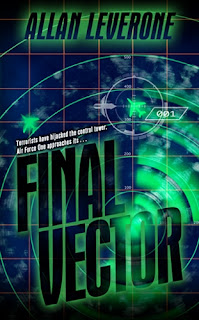
Allan Leverone, author of FINAL VECTOR


© Allan Leverone 2011 all rights reserved


I was pretty ignorant about the hard realities of publishing when I decided to try my hand at writing a novel. I figured, “How hard can it be? I’ll write a good book, submit it to a number of different big New York publishers, and then I’ll wait for the offers to come flooding in and I’ll pick from the best one.”

Simple.           

So was I, looking back on it. I had absolutely zero knowledge about the process of getting a novel published, beyond the “write a good book” part. But I was ignorant, not stupid. After finishing my first manuscript, I set about learning as much as I could about the publishing business in order to be able to sort through the many offers I would soon be receiving from Random House, Penguin, etc.

I suppose it goes without saying that the first thing I learned was there would be no offers from Random House, at least not until I had persuaded a literary agent that my work was worthy of his/her time, since the days of publishing’s Big Guys accepting “over the transom” manuscripts were long past. Oh yeah, and landing an agent would be no picnic, either. It would be at least as difficult as persuading that fictional Random House employee to buy my book, maybe more so.

I should probably note for you that all this was occurring in early 2007, before the current explosion in electronic reading devices had begun to turn the publishing world on its ear. Self-publishing back in the dark ages of 2007 was frowned upon to the point that it was considered career suicide for any writer—particularly an unknown writer trying to get his foot in the door—to place his own work into the marketplace.

It was all about distribution, you see. No distribution meant no sales to speak of, because, as everyone knew, the way to sell books was for your publisher’s sales force to fan out across the country and convince bookstore owners/buyers that the author of the book they were pushing would be the next J.K. Rowling or Dan Brown or Stephen King or Clive Cussler, depending of course on the genre of the book.

It seems almost quaint, doesn’t it? Like the idyllic picture of a much simpler world your parents or grandparents paint when they talk about how wonderful things were back in the good old days of 1990 or 1970 or 1950, depending upon how old you are and how old your parents or grandparents are.

That was less than four years ago. Now it seems many of those bookstores an author was so desperate to get shelf space in have either closed their doors for good or are in the midst of their agonizingly painful death throes. Shelf space in a real, brick-and-mortar bookstore? Sure, that would be great, who wouldn’t want that? But it represents the old model.

And I’m not here to tell you that’s a bad thing. If I could get my thriller, FINAL VECTOR, placed next to Barry Eisler’s latest or Lee Child’s latest, would I turn down the opportunity? Not on your life! I would probably camp out in front of the store’s entrance every night so that when they opened their doors for business in the morning I would be first in line to admire . . . I mean, examine, yeah, that’s it, examine . . . the display.

But let’s face it—Allan Leverone is an unknown quantity, unless you happen to be a fan of mystery short fiction or dark short fiction, in which case I am only a mostly unknown quantity. The odds of my thriller ending up in the same zip code as Lee Child’s at your local bookseller are roughly equivalent to the odds of me winning a “Best-looking Author” photo” contest—and there’s not enough air-brushing in the world for that to happen.

But the thing about being an author in 2011 is that there are now other legitimate ways to sell books and, for new authors, to begin building a fan base. I spent a lot—no, wait, a LOT—of time querying agents between the spring of 2007 and late 2009, doing things the established way, spending hundreds of hours contacting many dozens of agents, all in the hopes of making that elusive connection, all in vain.

Finally, in late 2009, while still trying to gain the attention of an agent, I decided to try another tactic—I would begin sending my manuscripts to smaller, independent publishers, many of whom differ from the Big Guys in that they do not require agented submissions. It was a world of difference from self-publishing, as most Indies have their own daunting submissions procedures and rigorous editing process.

Almost immediately Medallion Press, one of the biggest and, in my opinion, best, of the Indies showed an enthusiastic interest in my book about an air traffic controller who must stop an attempted assassination of the President of the United States while his dealing with his own wrenching personal loss.

You want to know the best part of this brave new publishing world? After some changes of proposed format over the past year, FINAL VECTOR is now available as an ebook, and thus is completely insulated from the make-or-break aspect of attempting to gaining admittance into the rarefied air of your local bookstore’s shelves. As I try to develop a fan base for my debut novel, all I need do is convince thriller readers that they will be getting a good story when they download my book onto their electronic device.

It’s still not easy, don’t get me wrong. I’m still an unknown, or mostly unknown, author, but this slight leveling of the playing field has resulted in folks like me having at least the chance to reach a potential audience, especially as the ereader explosion continues. And that’s all I can ask for. Because, ultimately, it’s all about the story.

“Write a good book.” How hard could it be?


Allan Leverone is a three-time Derringer Award Finalist whose short fiction has been featured in Needle: A Magazine of Noir, Shroud Magazine, Twisted Dreams, Mysterical-E and many other venues, both print and online. His debut thriller, titled FINAL VECTOR, is available February 2011 from Medallion Press. For details, please visit www.allanleverone.com or his blog at www.allanleverone.blogspot.com.  Don’t forget to join him at Pump Up Your Book’s March 2011 Authors on Tour Facebook Party on March 25.  Visit his virtual book tour page at http://www.pumpupyourbook.com/2011/01/16/final-vector-virtual-bookk-tour-february-march-2011/ for more information!

Sunday, March 6, 2011

Are all Writer’s Egoists? (or is it just me...)


Writers are terribly self-centered.

Now, don’t get offended. I’m not really talking about all of you. I’m pretty much talking about me.

Strangely enough, I don’t think anyone in my non-writer life would label me an egoist. Or an egotist, for that matter. I had to look up the difference, but there isn’t much of a distinction, as far as I could tell.* Anyway, I can’t picture someone calling me either one of those. At least not to my face.

With my family, colleagues at my day job, and with neighbors and friends, I try to be a good listener. I try to be generous. I take time to be there for them, to encourage them when they’re down, to support them when they’re mourning. I care about family and friends and frequently make sacrifices for them.

I sound pretty great, don’t I?

Ahem. Read on.

In my writerly world, I am horrified to admit that I have recently come to learn I’m a HUGE egoist.

Look at the first few paragraphs in this piece. How many times did I use the word “I?” TWELVE! It’s always all about what I think, or what I noticed, or what I wrote. Isn’t it? (Of course, I guess it might be hard to write about what you think or notice. LOL.)

I started to ponder this recently when I had a confrontation with a friend, and she pointed out to me how much I write about **me**. After a bit of soul searching, I realized she was right.

I try to be a good guy. I really do. This is in spite of all the stupid things I do, like dribbling my red herbal tea on the new carpet at work yesterday (I spent an hour cleaning it) and consistently forgetting to attach files to emails. If it can be screwed up, I’ll do it.

So, I’m an egoist and a klutz.

That’s not all. No. Not only am I all of the above, I’m mean.

REALLY mean.

I am merciless to my characters. I put them through the wringer time and time again, without care for their suffering. I torment them. I make them endure horrible losses. I hurt ANIMALS, for God’s sake. Okay, so I rescue them in the end, but what kind of a jerk does that to poor, defenseless animals?

Sigh.

I suppose we writers can always pretend to sit back and be the philosophical documenter, the great observer, the quintessential Hemmingway-esque witness of life. But however life presents itself - brutal or tender, seedy or majestic - all fiction comes from our inside our own minds. It’s all about how we see it. How we imagine. How we think our characters would feel.

Isn’t it?

So, how do we compensate for being such egoists?

It’s not as bad as it sounds. It certainly isn’t hopeless, and I’m pretty sure we can redeem ourselves.

Maybe we can find redemption by setting good examples through our characters' actions while they're in the midst of dashing here or there during the page turning suspense. One thing I never intended to do with my three mystery series was to teach lessons about nurturing a family, tending to a disabled wife, dealing with trauma or loss, or being a good father or grandfather. Those things just found their way into my books, because my characters do that stuff in their everyday lives. To my surprise, my readers have come back and thanked me for doing just that. It humbles me to think that by including some amusing family scenes in the middle of the mayhem, I might have actually done some good. One fellow actually told me I made him a better dad. And another wrote to say I got him through his chemo.


Like I said, it’s all pretty darned humbling.

Can examples like these make up for my weaknesses and faults? For that great big ego? For my incessant ranting about me?

Man. I sure hope so.


Aaron Paul Lazar
www.legardemysteries.com


–Egoist, noun
1. self-centered or selfish person ( opposed to altruist).
2. an arrogantly conceited person; egotist.

Egotist, noun

1. a conceited, boastful person.
2. a selfish person; egoist.

***

To read more about this egoist, go to the Lazar tab at the top of the page. ;o)