Friday, June 27, 2014

Sometimes Less Really is More, by Mike Sova


Hello, MB4 fans and friends.

We've all learned hard lessons along the way when writing our first novels, haven't we? It's just part of the rights of passage, I think. Some learn to make their dialog more natural or to avoid "forbidden words." Others learn about grammar or the "newly accepted" etiquettes, such as using only one space between sentences, instead of the two spaces we were taught to use in high school.

There's so much to learn!

Today, Mike Sova shares his insights into the benefit of writing books that fit the printing industry's standards, so his fans will be able to afford his book. I think it makes a lot of sense, especially since all my books are regularly less than 100K words, and they still cost about sixteen dollars each!

Thanks for stopping by today and have a great weekend.

Aaron Lazar
www.lazarbooks.com

Sometimes Less Really is More
copyright 2014, Mike Sova


 Do you hear that? It sounds like the shriek of grinding metal mixed with the sorrowful wails of countless tormented souls. No, Cash Douglas didn't hit the wall again. It's just me. Before I go any further, I should point out that Cash Douglas is the hero of A SHOT AT REDEMPTION, my debut suspense novel. He's a racecar driver, and what looks like a once in a lifetime opportunity turns into what Lemony Snicket would call “a series of unfortunate events.” They range from cryptic warning messages, to sabotage, to attempted murder. When I finally completed the manuscript nearly a year ago, I truly believed I'd dotted my last i and crossed my last t. After all, the book is already published and available right now in Amazon's Kindle Store. I haven't sold a ton of copies yet, but the reviews and feedback I've received have all been extremely positive. That's wonderful and I really do appreciate the kind words. By the way, I encourage you all to get in the habit of writing reviews or at least rating the books you read and enjoy. It makes a huge difference, maybe not to the Stephen King types, but certainly to the authors a bit lower on the literary ladder. There are a lot of us and we need all the help we can get (insert sincerity emoticon here).

 So back to my manuscript. It's under construction once again. I am endeavoring to delete, cut, slash, incise, chop, trim, sever, or otherwise remove a minimum of 20,000 words. Why, you might ask, would I do such a thing? Simple. The one question I'm asked more than any other is when will your book be out in print? I don't have an answer to that yet. What I do know is that print costs are staggering. I wrote a suspense novel. The average length of a book in that genre is around 120,000 words. Mine topped out north of 207,000. The longer it is, the more it costs to print. And for a totally unknown commodity like by Michael Sova, that's a double-edged sword.

http://www.amazon.com/Shot-at-Redemption-Michael-Sova-ebook/dp/B00HNY0J52/ref=sr_1_1?ie=UTF8&qid=1394630415&sr=8-1&keywords=a+shot+at+redemption
With certain authors, I'll say Ken Follett this time, it may take 100,000 words just to get warmed up. His publishers don't blink an eye because they know anything he writes will sell. He backs that up by cranking out one great book after another. In economic terms, that's called low risk--high reward. It's an entirely different scenario for a new author with a debut novel a good bit longer than the industry standard. Once you enter the realm of high risk--low reward, publishing contracts are a lot harder to come by. In a nutshell, my hefty manuscript wasn't doing me any favors.

 As Billy Joel sang in The Entertainer way back when, "If you're gonna have a hit you gotta make it fit so they cut it down to :3.05." That doesn't just apply to popular music. At first, I didn't worry much about word count because I planned on pursuing one of the many print on demand options. In other words, I was releasing a bootleg. I really didn't see the need for an agent or what's now called a "traditional" publisher. I assumed I could to it on my own and please don't confuse me with the facts. Can you say rude awakening? I checked out a few different POD companies. Based on the length of my book, I was looking at print costs ranging from about $9.00 to, and this one totally floored me, $34.00. That's cost only, and doesn't take into consideration things like, shipping, handling, or something called profit. If I have to charge upwards of $34.00 just to break even, what's my price point if I actually want to make any money? I may as well charge a thousand bucks a copy because no one's going to shell out that much for a paperback anyway. If print on demand is what I end up doing, and it is still a possibility, a shorter book will be better for me and likewise better for my readers. And so, the revisions continue.

 A SHOT AT REDEMPTION is sort of a niche book because the main character is a short track racecar driver. You don't see much of that in mainstream fiction. Actually, I've never seen it at all. Because of that, and because the manuscript took so long to finish, I didn't spend much time trying to find a literary agent. I decided on my own that it would be a tough sell, so rather than sending out hundreds of queries and then waiting around to be told what I thought I already knew, I went straight to self publishing. I know now that I was a bit too hasty. I recently had the opportunity to interview Campbell Award winning urban fantasy author Mur Lafferty and I asked her about the biggest mistake she sees new authors make. She said, They ignore “the man” and run straight to self pub when their writing isn’t accepted immediately. There’s a fine line between self publishing something of quality because a publisher can’t find a home for it, or you have a readership you know you can reach, and rage-publishing your first novel after you get a rejection that hurts your feelings. The process of dealing with “the gatekeepers” does more than hurt your feelings, it makes you a better writer because it often points out things that are wrong with your writing.

 For the record, my decision to self publish was not based on rejection. I didn't even give rejection a chance. Yes, I have an audience I know I can reach. I also believe in my heart that my book would be enjoyable to any fan of the suspense genre. I was selling myself and my readers short by not at least trying to get a publishing contract. I'm thankful to Mur for opening my eyes. Once I find that publisher and the book is finally in print, Mur Lafferty will be near the top of my acknowledgements page. In the meantime, I'm sending out query letters every day. I'm working on the manuscript as well. I've trimmed roughly 8,000 words so far. I still have a long way to go but I know it will be worth it in the end.

Note: The previous post was written about two months ago. Since then, I revised the A SHOT AT REDEMPTION manuscript and cut better than 40,000 words. It was hard. I believe the gang on the Writing Excuses podcast refers to that type of editing as "killing our babies." That's sometimes how it feels. I had to scrap heap some passages I truly loved. However, even as my trembling finger inched toward the delete key, I knew I was making my book stronger. Yes, I began the endeavor merely in an attempt to cut costs. Mission accomplished, with a bonus. The book is better than I thought I could make it, and isn't that really what this is all about?  

***

About the Author:


Michael Sova is a blogger, book reviewer, and author of the new suspense novel A Shot at Redemption. While earning his BFA at the State University of New York at Oswego, he spent time in print and television journalism related to auto racing. That led to a career in radio where he worked as a promotions director, music director and DJ. Michael now concentrates on his writing craft. He enjoys reading, red meat and cold beer. He's also an avid sports fan, and spends much of his time from September through December lamenting the deplorable state of the Minnesota Vikings. Michael lives in New York with his wife and two children. Visit him at http://www.michaelsova.com. 

About A Shot at Redemption:

In racing circles, Cash Douglas would be referred to as a helmet carrier. He has made a career of jumping from car to car and track to track, always following the big paydays and never worrying about whose toes he might be stepping on in the process. He has his reasons. When Cash and his wife find themselves facing a personal crisis and an ever-growing stack of medical bills, he relies on his unique skill as a race car driver to make money the best way he knows how. He’s able to provide for his family but his reputation suffers.

About the time his situation begins to improve, Cash receives what he believes is a once-in-a-lifetime offer to drive for RaceTech, a brand new supermodified race team. Frank McKinnel, the eccentric owner of RaceTech, has plans to franchise his custom race parts business. He wants publicity and knows hiring a black sheep like Cash Douglas is a sure way to get people talking. His decision angers at least one person as well.

A suspicious practice day crash is the first of many misfortunes. Broken windows lead to slashed tires, mysterious warning messages, assault and attempted murder. Someone is out to get Cash, or RaceTech, or both. The big question is why? Frank McKinnel appears to be the only one with a clear motive. He has a knack for turning publicity into profit, but would he trash his own cars and risk the life of his driver just to sell a few more franchises? Cash has to find out before it’s too late.
Read or listen to excerpts from the book at http://michaelsova.com/my-work/about-the-book/


Friday, June 13, 2014

An Interview with MB4's Aaron Paul Lazar

by

Dora Machado

Hello everybody. I heard through the grapevine that our very own Aaron Paul Lazar has added a new award to his credits. So I thought I should ask! 

Welcome Aaron and huge congrats! What's this we hear about a new award for your latest romance, The Seacrest?

Hi, Dora.

Thanks for asking! ;o) I was really thrilled when a few months ago, The Seacrest was announced as a finalist for this year’s FOREWORD book of the year awards (we find out June 29th if it won its category!), but then last week I was surprised to discover the book has also WON the romance category of the Beach Book Festival 2014. It’s very gratifying, because as you and our MB4 fans may know, this was my first foray into writing a pure love story, after writing dozens of mysteries over the past decade.

http://www.amazon.com/Seacrest-Aaron-Paul-Lazar-ebook/dp/B00G1TDBRI/ref=sr_1_1?ie=UTF8&qid=1402655062&sr=8-1&keywords=the+seacrest
That's awesome, Aaron. Why is The Seacrest perfect for the beach this summer?

This book is set exclusively on Cape Cod, in Brewster, Mass, at a mansion by the sea called The Seacrest. It rotates across time by chapter, telling the story of a young Finn McGraw at age 16 who falls madly in love with a girl he meets on the beach named Sassy, and the current day story of Finn as an adult who has suffered great losses and is about to be slammed with many more horrific surprises, while still pining away for his long lost love.

But most of the scenes include sand, waves, seagrass, and a salty tang on the sea breeze. There are lovemaking scenes in a cove on the beach, horseback riding in the surf, and many poignant moments spent down on the shore. ;o) So in my humble opinion, it’s a perfect beach read!


How does it feel to cross genres, to step out of your usual genre and be so warmly welcomed into the romance genre?

Dora, I’d always said with tongue-in-cheek that I might someday write a romance. I’d never read any romances, per se – unless some of the romantic suspense novels I’ve read could qualify. But I knew I had at least one great love story in me, and frankly, a lot of my mysteries included subthemes of love, or unrequited love, or love lost. I enjoyed writing those subplots in my mysteries, and played them up a bit more in my newer Tall Pines Mysteries. Finally, last year I began to think about Cape Cod again. We’d been planning a vacation there (first time in 9 years!) and I was really psyched about it. I started writing The Seacrest and was partially done by June 2013, when we returned to Brewster, Mass, a gorgeous village on the bay side of Cape Cod.

Once we arrived, I resumed my love affair with all things “Cape” and found plenty of great color and local plant life and scene details to fill in the rest of the story with a genuine feel of Cape Cod. I took hundreds upon hundreds of photos, and still look back at them with great enjoyment. We’re about to go back there this month, and I am seriously thinking about writing a sequel to The Seacrest. Maybe this vacation will be the inspiration for my next great love story? We shall see!

Congratulations again, my friend. Well done!

Dora, thanks for asking about my newest award and have a wonderful weekend!

Yes, have a wonderful weekend everybody!


Aaron
www.lazarbooks.com


Wednesday, June 4, 2014

The Luckiest Person I Know

By

Catherine Lea  


Every once in a while you read a post that puts your writer's life in perspective. This is one of those posts. It is my distinct pleasure to introduce Catherine Lea's guest post on MB4. Catherine is the author of The Candidate's Daughter and the upcoming The Contestant.  Her uncanny characterization abilities, combined with innovative and refreshing plots, have impressed readers and critics alike. She writes thrillers with a heart and it is precisely the depth of her heart that she chooses to share with us today. 

I hope you'll find this remarkable post as centering and inspiring as I did.

Enjoy!

Dora

*****

Spoiler Alert!

The luckiest person I know – is me.

That’s right. When I tell people that I’m the luckiest person I know, they look at me as if I’m nuts. Maybe I am. But lately, I just keep hearing myself muttering, “Oh. My. God. I am the luckiest person I know.”

I told a someone that just yesterday. A clanging silence hung between us, then she said, “Weeeellll, yes, I suppose you could see it that way.”

Yes, I do see it that way. Let me count the ways … or at least bullet point them:

• I’m the mother of a beautiful but severely disabled girl who has taught me more lessons than you’d ever pay for. She’s funny, she’s bright, and she’s one of my best friends.


• I receive an income from the New Zealand government so I can care for my girl. Okay, so it’s not a fortune. I will not grow rich on it. But it gives me the opportunity to stay home and give my girl the quality of care she needs and deserves. It also gives me the opportunity to write while I’m doing it. I couldn’t ask for more.

• I have my own home. Yes, I worked for it. Yes, I went without to get it. Yes, there were those who thought anyone on my pathetically low income that set out to build a new home, was completely certifiable. But I did it for my girl. She’s the one that gave me the courage and the determination to keep going. If it wasn’t for her, I’d never have gotten to where I have. And there are those out there who have worked, and gone without, and still don’t have what I have.

• I have the most amazing, supportive friends. When my girl went into the Emergency this week, my fabulous friend, Marg, came to the hospital and sat for seven of the eight hours with me in the Resus Room. Then she took me home afterwards. We forwent the McDonald’s on the way because we were both too tired. That was probably also a blessing.

• I have neighbours that I can call on. My wonderful neighbour will pick up supplies for me, let the dog out when I can’t, cook a meal for me when I’m snowed, and pick up a DVD for me while they’re out. How amazing is that?

• I have in-home support. For three nights a week, I have someone come and sit over so I can sleep. It’s a service that’s supplied by the New Zealand Health Board. I’m more grateful for that than I can say.

• I’ve “met” the most supportive, sympathetic, knowledgeable, and generous group of people in Backspace, an online writers’ group. I’ve made friends there, gotten advice you couldn’t find anywhere else, found help and encouragement when I needed it most.

• It was through Backspace I found the amazing, wonderful, generous, Sara J. Henry. Sara is the multi-award-winning author of A Cold and Lonely Place and the stunning, Learning to Swim. It was Sara who took me under her wing, read The Candidate's Daughter over and over until her eyes bled, edited, nurtured, and cheered me on. When the book went up on Amazon, Sara was there. She threw her support behind me, opening doors, and recommending my book to her audience. You rarely find a more sincere heart. One day I will meet her. That day I will tell her how much her help meant to me. In the meantime, I shout her praises wherever I can.

• I have a fantastic group of writing buddies. One of my best friends is a terrific writer, an ER doctor, my go-to girl. It helps that she has a terrific sense of humour. She makes me laugh, she makes me work, and she manages to come up with the most fantastic ills and cures for my characters.

• My book, The Candidate's Daughter, is being read, and enjoyed, by people all around the world. It’s getting reviews that make me smile from ear to ear. I now have a second book about to go live titled, The Contestant. After that I start the sequel to The Candidate's Daughter. I get to choose what I write, and market my work on the world stage. Twelve years ago when I began writing, this would never have happened. I’m so blessed.

• I have the most incredible support from the Hospice. Only yesterday, my girl’s breathing became laboured. Her chest sounded like she was drowning. I called, the hospice nurse came. They give me support, advice, after-hours medical care, and respite. I don’t know what I’d do without them.

• My girl’s daily program, Creative Abilities, is the result of visionary Liz Soper’s desire to create a program for intellectually disabled adults, to provide a place where they find self-esteem, support, friendship, respect, and a special place in this world. Creative Abilities is staffed by the most talented, caring, and compassionate people you could meet. Every day I tell myself how lucky we were to find them.

These are only a few of the blessings I count every day.

Do I have bad days? Of course I do. There are days I really wonder how I’m going to get through.

Do I get down, angry, frustrated? If I didn’t, I really would be nuts.

But once I’ve had a grizzle and a gripe, I’ve learnt to quickly turn myself around, find the good in my day, and carry on. I’ve learnt that one bad day doesn’t make a bad life. I’ve learnt that no problem is insurmountable, that even if the outcome isn’t what I wanted, it’s what I can cope with. I’ve learnt that tomorrow, the sun will surely rise, and a new day will begin.

And that I’m the luckiest person I know.

******


Catherine Lea lives in New Zealand with her disabled daughter, and a fox terrier that thinks he owns the house. She has sold international satellite capacity, worked in IT recruitment, and run her own communications store. She's the author of  The Candidate's Daughter and the upcoming The Contestant. 
When Catherine isn't writing, she's dog-wrangling, wrestling with technology, blogging, or going crazy trying to maintain control of the yard.

******

Dora Machado is the award-winning author of the epic fantasy Stonewiser series and her newest novel, The Curse Giver, available from Twilight Times Books. She grew up in the Dominican Republic, where she developed a fascination for writing and a taste for Merengue. After a lifetime of straddling such compelling but different worlds, fantasy is a natural fit to her stories. When she is not writing fiction, Dora also writes features for Murder By Four, an award winning blog for readers and writers and Savvy Authors, where writers help writers. She lives in Florida with her indulgent husband and three very opinionated cats.

To learn more about Dora Machado and her novels, visit her website at www.doramachado.com or contact her at Dora@doramachado.com, Facebook: https://www.facebook.com/DoraMachado101, or  https://twitter.com/DoraMachado.


Tuesday, June 3, 2014

Insights from Author Uvi Poznansky - The Writing Process


Hello, MB4 friends and fans,

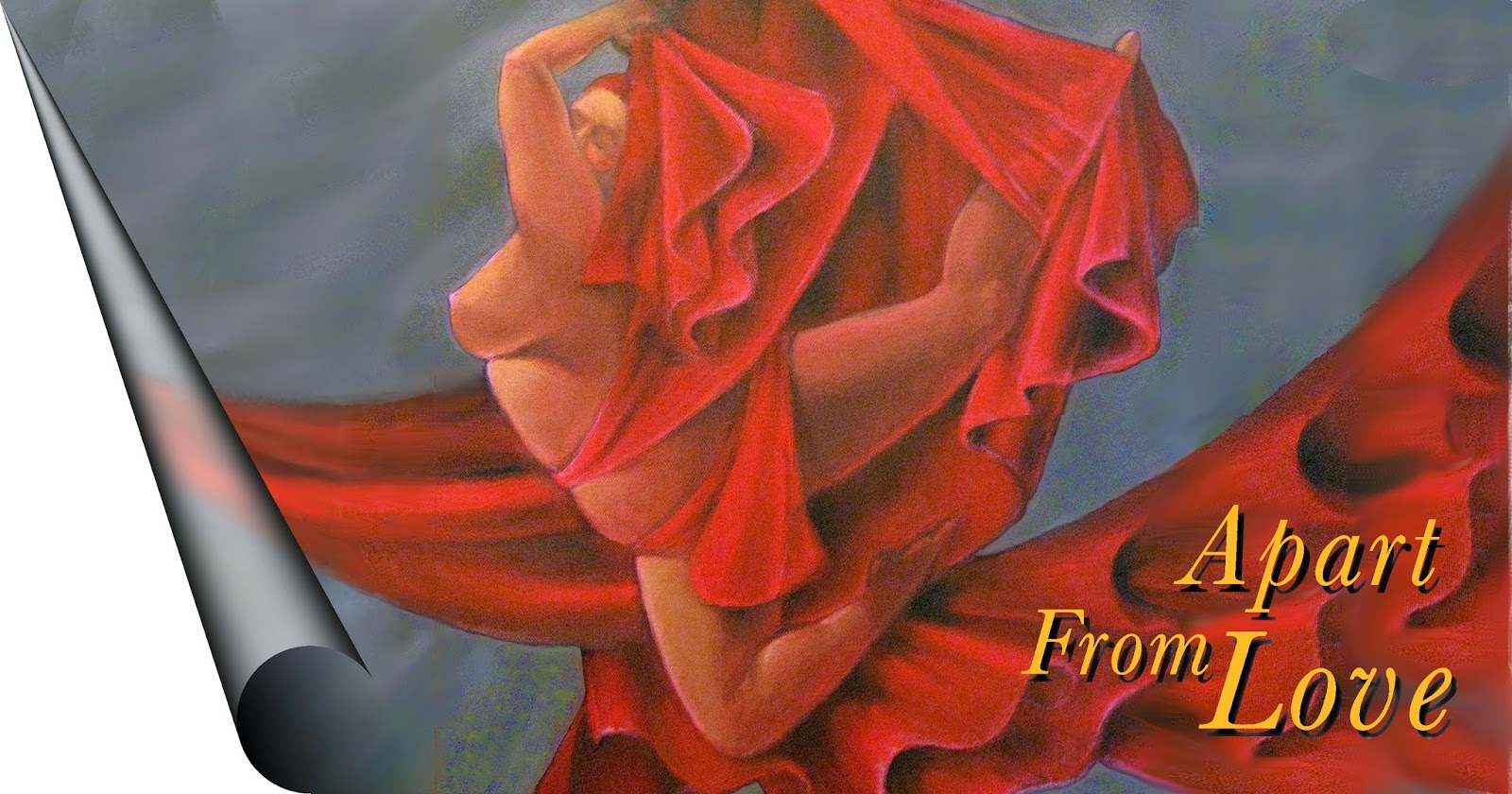
Today we welcome a wonderful writer, Uvi Poznansky. I read and loved APART FROM LOVE and would recommend it and especially the beautifully produced audio book, to anyone who loves to read about family and the complicated relationships that result. 

Uvi will share some of her writing insights with us today, as well as a few choice samples. 

Welcome, Uvi, and thanks for being here on Murderby4 today.

Aaron Lazar

 http://uviart.blogspot.com
copyright 2014, Uvi Poznansky

How does my writing process work? 


In any task you undertake, you often hear the advice: start at the beginning, continue down the middle, and finish at the end. Writing is no different. Problem is, as you advance diligently down that path, you may find–to your surprise–that you are getting better, more proficient at your craft. Suddenly the opening of this chapter sounds so much catchier than the previous one; and the ending more powerful. You must constantly re-evaluate and rework previous chapters. So in my opinion, the process of writing is cyclical. By the time I completed the last chapter of my novel, APART FROM LOVE, I knew I had to discard–or at least, rewrite and restructure–the first chapter.

This, then, is the first page of the first chapter, in which Ben is about to return–reluctantly–to his childhood home, and to a contentious relationship with his father: 

“About a year ago I sifted through the contents of my suitcase, and was just about to discard a letter, which my father had written to me some time ago. Almost by accident my eye caught the line, I have no one to blame for all this but myself, which I had never noticed before, because it was written in an odd way, as if it were a secret code, almost: upside down, in the bottom margin of the page, with barely a space to allow any breathing.

The words left some impression in my memory. I almost wished he were next to me, so I could not only listen to him, but also record his voice saying that.

I imagined him back home, leaning over his desk, scrawling each letter with the finest of his pens with great care, as if focusing through a thick magnifying glass. The writing was truly minute, as if he had hated giving away even the slightest hint to a riddle I should have been able to solve on my own. I detested him for that. And so, thinking him unable to open his heart to me, I could never bring myself to write back. In hindsight, that may have been a mistake.

Even so, I am only too happy to agree with him: the blame for what happened in our family is his. Entirely his. If not for his actions ten years ago, I would never have run away to Firenze, to Rome, to Tel Aviv. And if not for his actions a couple of weeks ago, this frantic call for me to come back and see him would never have been made.

And so I find myself standing here, on the threshold of where I grew up, feeling utterly awkward. I knock, and a stranger opens the door. The first thing that comes to mind: what is she doing here? The second thing: she is young, much too young for him. The third: her hair. Red.”


http://BookShow.me/B006WPITP0
How did I embark on writing this story? 

Over a year ago I wrote a short story about a twelve-year-old boy coming face to face, for the first time in his life, with the sad spectacle of death in the family. In the story, Ben watches his father trying to revive his frail grandma, and later he attempts the same technique on the fish tilting upside down in his new aquarium.

“I cannot allow myself to weep. No, not now. So I wipe the corner of my eye. Now if you watch closely, right here, you can see that the tail is still crinkling. I gasp, and blow again. I blow and blow, and with a last-gasp effort I go on blowing until all is lost, until I don’t care anymore, I mean it, I don’t care but the tears, the tears come, they are starting to flow, and there is nothing, nothing more I can do—” 

I set the story aside, thinking I was done with it. But the character of the boy, Ben, came back to me and started chatting, chatting, chatting in my head. It became the seed of my novel, APART FROM LOVE.

In writing it I asked myself, what if I ‘aged’ him by fifteen years? Where would he be then? Would he still admire his father as a hero, or will he be disillusioned at that point? What secrets would come to light in the life of this family? How would it feel for Ben to come back to his childhood home, and have his memories play tricks on him? What if I introduce a girl, Anita, a redhead who looks as beautiful as his mother used to be, but is extremely different from her in all other respects? And what if this girl were married to his father? What if the father were an author, attempting to capture the thoughts, the voices of Ben and Anita, in order to write his book? 

So the process of writing became, for me, simply listening to the characters and trying, as fast as I could, to capture their thoughts. My role as an author became simply suggesting a place, coming up with the stage set and illuminating it as appropriate for the mood and the time of day, and allowing the characters to describe what they see and to act out their passions, fears, and hopes. 

The truly magical part happens once the ink dries. It is then that you, the reader, come in, to open the cover and let the characters spring to life in your own mind, which connects it to mine.


About the Author:


Uvi Poznansky is a California-based author, poet and artist. Her writing and her art are tightly coupled. “I paint with my pen,” she says, “and write with my paintbrush.” 

She earned her B. A. in Architecture and Town Planning from the Technion in Haifa, Israel. During her studies and in the years immediately following her graduation, she practiced with an innovative Architectural firm, taking part in the design of a large-scale project, Home for the Soldier.  

At the age of 25 Uvi moved to Troy, N.Y. with her husband and two children. Before long, she received a Fellowship grant and a Teaching Assistantship from the Architecture department at Rensselaer Polytechnic Institute, where she guided teams in a variety of design projects; and where she earned her M.A. in Architecture. Then, taking a sharp turn in her education, she earned her M.S. degree in Computer Science from the University of Michigan. 

During the years she spent in advancing her career—first as an architect, and later as a software engineer, software team leader, software manager and a software consultant (with an emphasis on user interface for medical instruments devices)—she wrote and painted constantly. In addition, she taught art appreciation classes.  

Her versatile body of work can be seen on her website, which includes poem, short stories, bronze and ceramic sculptures, paper engineering projects, oil and watercolor paintings, charcoal, pen and pencil drawings, and mixed media. In addition, she posts her thoughts about the creative process on her blog, and engages readers and writers in conversation on her Goodreads Q&A group. 

Uvi writes across a variety of genres: Apart From Love (literary fiction), Rise to Power (historical fiction), A Favorite Son (biblical fiction), Home (poetry), Twisted (fantasy), and two children’s book: Now I Am Paper and Jess and Wiggle.

Author Links:


Books (available in print, kindle, and audio editions):


Friday, May 30, 2014

The Good, the Bad, and the In-Between, by Beverly Stowe McCLure


Hello, MB4 fans and friends!

Today we welcome Beverly Stowe McClure, a fellow Twilight Times Books author who writes for children and teens. Beverly had shared some great insights about building better characters today, including one concept about her "vision boards." I love that idea and might just have to start pasting photos of my characters up on my walls, too. ;o)

Welcome, Beverly!

Aaron Lazar
www.lazarbooks.com

The Good, the Bad, and the In-Between


copyright 2014, Beverly Stowe McClure

What do you remember about a novel you've read? Is it the setting? The plots? The characters? Or something else?

I remember the characters. To me, they make the story. A character, whether fantasy or real life, and how he or she solves a problem, or doesn’t, stays with me long after I’ve closed the book. As a reader, I want to care about the hero or heroine. I want to see the bad guy get what he/she deserves. For a time, their lives become part of me.

As a writer, I need to create characters that are so real readers will identify with them and perhaps even find a solution to a situation they are dealing with through the actions of the hero or heroine.

How do writers create unforgettable characters? I can only speak for myself, but here are some things I do.
When a young voice whispers in my ear that she’s ugly, or an article I read in the newspaper, or a conversation I overhear between two children or teens plants an idea in my head, I know a story is there somewhere. I just have to find it. As an image of the girl grows in my thoughts, I want to learn more about her. Why does she believe she’s ugly? Is it her physical appearance or her inner being that disturbs her? So, I search for a picture of who this girl is. When I find her, I make a vision board to learn more about the girl.

A vision board is simply a poster board where you paste pictures from magazines. On this particular board, I put pictures of the girl, her family members, her friends, and even a VW Bug. Why the car? The car helps show personalities of the characters. By each picture, I add personal information: eye color, hair, age, etc. After several days of getting acquainted with the girl in my mind, and people in her life, she turned out to be Breeze Brannigan, with her own book titled JUST BREEZE. I’ve also done vision boards for my other books. The walls in my writing room are a collage of faces, staring at me. It’s spooky at times. Are they analyzing me the way I am them? But back to creating real life characters.

The protagonist, or main character, is usually the good guy. Now this does not mean he/she has no faults. A perfect person is boring. Give the protagonist an attitude. Give her a bad habit. Sometimes, let her do things she shouldn’t, like cause trouble between friends by gossiping. Give her a temper. Make her human. She has to be believable, or the reader will not care about her. Take Myra, another of my characters, in her award winning novel, LIFE ON HOLD, for example. She’s usually the ideal daughter. She doesn’t cause trouble, until one day she makes a discovery that changes her life forever. She ends up disobeying her parents to learn the truth they’ve hidden from her for sixteen years. Given a motive, most characters will morph from the gentle person they normally are to one determined to achieve their goal, regardless of the consequences.
The antagonist is the bad guy, the character we love to hate. An antagonist makes life miserable for the protagonist and other characters in the story. An antagonist should have a good point or two, though. He’s not all evil (though it seems in real life some people are). I like to make the villain powerful. To make it look like he/she will win. I also believe the villain must justify his/her actions. Why does he do the things he does? What secret is he hiding from the world that makes him/her strike out at others? Is there hope for his/her redemption in the end? Think of Ebenezer Scrooge, in A CHRISTMAS CAROL, and how he discovers the true meaning of Christmas. One of the most villainous villains I’ve encountered is Dark Lord Voldemort from HARRY POTTER, who is so evil the other characters won’t even speak his name. I want to write a villain like Voldemort.

The villain isn’t always a person. In a novel about a hurricane, tornado, or other natural disasters that disrupt the lives of the characters, the weather can be the villain. Also, the protagonist’s inner self can be the troublemaker. The girls in THE SISTERHOOD OF THE TRAVELING PANTS each face decisions that only they can make. An illness can disrupt a character’s life, too, thus being the bad guy. In my award winning historical fiction, CAVES, CANNONS, AND CRINOLINES, the Civil War is the villain, bringing changes, even death to everyone’s life.

Last, but very important to a story are the in-betweens, the supporting characters. In books for children and teens, which I write if you haven’t already guessed, these are parents, friends, teachers, and other people the child/teen comes in contact with. Breeze has her best friend, Amy, who’s always there to support her. Unlike many teens, Breeze also has a caring mother, father, and siblings. Her problem is the image she has of herself, typical of many Jr. High girls. In Myra’s story, her friends, especially her boyfriend, help Myra discover the true meaning of being a father, even though at the end she must choose which way she goes for herself.

Fantasy novels contain witches, ghosts, dragons, fairies, and other supernatural beings. I really have fun with fantasy characters. An author’s imagination has no limits, as long as the characters are kept within the realm of possibility, which can be stretched a lot. In my latest ghost story for tweens, the ghosts, although they’re supporting characters, are vital to the novel. I wanted to make them believable, so I researched facts and fiction about ghosts to see how to portray the pirate, the blockade runner, and the cat. Why are they ghosts? Can the other characters talk to them, touch them, and even help them solve the problems that keep them in limbo, caught between worlds, so they can pass over to the other side? Complicating this novel even more, is the fact the ghosts are historical figures that really lived, except for the cat. Staying with the true facts was important because young readers would pick up on mistakes, and I would lose my credibility as a writer. More research yielded great information to add to the plot of the novel, and A PIRATE, A BLOCKADE RUNNER, AND A CAT was born, with a mixture of good, bad, and in-between personalities.

Another thing I try to avoid is stereotyping my characters, whether in fantasy or real-life. They are individuals, with their likes and dislikes. They are not from a special group of people that have certain reputations. In addition to the vision boards, writing a profile for my protagonist, antagonist, and other important characters helps me develop personalities for each person, so they don’t seem like carbon copies of each other. I jot down their physical features, but I don’t stop there. What does each character want? What are their flaws, beliefs, hobbies, motivations? Does each character grow in the story. I need to see the character’s arc. Interviewing each character is another way to become acquainted with my characters. What they keep to themselves when they refuse to answer a question (yes, they often stay silent), tells me more than the answers they give. My main goal is to bring my characters to life, to make the reader relate to their needs and wants and to cheer for them when they achieve their goals. When this happens, and I especially love it when a reviewer mentions how much they like a character, I’ve reached my goal. And don’t be surprised when the characters say, “Thank you.” That’s what it’s all about.

Happy Writing.

Beverly Stowe McClure


***

About the author:

When Beverly was in eighth grade her teacher sent her poem “Stars” to the National High School Poety Association, and she was soon a published writer in Young America Sings, an anthology of Texas high school poetry. Forty years later, she sent an article on fire safety in the home to Happiness magazine, and it was published. In between she went to high school, played clarinet in the band, was a majorette, and graduated. Then she got married had three sons (one an angel in heaven), and attended Midwestern State University. She graduated cum laude with a teaching certificate and had a fourth son. She taught children in elementary school for twenty-two years. Writing was the farthest thing from her mind.

She lives in the country, where deer sometimes drink from the pond, skunks prowl the yard for leftover dog food, armadillos dig for bugs, and a roadrunner peeks in the glass doors to see what’s happening. Beverly enjoys long walks, photographing birds, deer, clouds, and just about anything. She plays the piano, talks to her cats, and researches her ancestors. She teaches a woman’s Sunday school class. And she writes most every day.

She misses her husband of 56 years.


Website: http://beverlystowemcclure.wordpress.com
Blog:      http://beverlystowemcclure.blogspot.com

Thursday, May 29, 2014

Summertime Hiatus: See you in the fall

Hey everyone! I am off to celebrate the warm weather months donned in a pair of shorts and tee shirt with my flip flops on and my notebook at the ready to get some major writing done.

This means I will not be posting as regularly as usual. I will check in on the blog periodically over the next few months-when I am busily sipping lemonade

in the shade of my big old oak tree in the front yard.

As some of you may know, this is the busy season for my business, VideoVision Entertainment, and we will be shooting videos and photos of weddings,

graduations, and plays all summer. It's such a busy time at Smith Casa that I will not be able to be as connected as I usually am. So...have a glass of something tall and delicious, and smell the flowers and enjoy this season!


Just hoping you all have a wonderful summer and get the next blockbuster written.

Happy Summer!

Friday, May 23, 2014

What month is it anyway? by Marsali Taylor

Hello, MB4 friends!

Today we have a lovely guest blog by one of our favorite Scottish writers - Marsali Taylor. Please show her a big MB4 welcome by commenting on her article, below. Enjoy!

Aaron Lazar
www.lazarbooks.com


copyright Marsali Taylor, 2014


Shetland is one of these places where you really notice the weather – and live by it.  A blink of sunshine and I’m outside, pottering round the garden or taking my beloved boat out for a sail; wind has me closing the double curtain behind the front door and bringing in peats to light the fire; rain means there’s a little river down the front path, and I need my sailing oilskins just to feed the ponies. Each season has its own colours: spring’s heralded by the fresh yellows of celandine, daffodil, buttercups, and the blue-green of spring grass; summer’s the pink and white of ladysmock in the ditches, scented dame’s violet in every garden, and hills of soft emerald; in autumn, the hills are purple with heather, and the spagnum moss turns garnet red; in winter, the dead grass clumps fade to gold, and the heather is chocolate brown.  The clouds in the sky, the colours of sea and shore, the feel of the wind, all change according to the seasons – oh, and the sounds: the peep, peep of the oystercatchers that fills the spring, and the screag of the summer terns, the houb-houb-boub of snipe wings as the light dims; the rumbustious gales of autumn, with waves crashing on the shore, and the sullen whistle of a winter wind, or the hush of deep snow, with the hoot of swans flying over.

This gives me a problem as a writer.  I find it hard to remember other times of year: when the summer sun shines in on my face at 4.30 am, I can’t quite visualise the winter days when we woke in the dark at 7, and while we’re shivering in three jumpers, it’s hard to believe I wore shorts all summer... and so, given that it takes about a year to write one of my Cass novels, it’s really hard to keep that feel of the season it’s set in.  Her first murder, Death on a Longship, was set in late May / early June; her second, The Trowie Mound Murders,  takes place three months later, at the start of August.  The third, A Handful of Ash, is set at Halloween, and I’m now working on the fourth, as yet untitled, and set at Christmas.  It has to be finished for September, so I’ll be writing all through these summer months.  Help!

I don’t know how other writers cope with this, but here’s my solution.  I knew it was to be a Christmas book, so I began just before Christmas.  I opened up a word document and wrote the days and dates of the period covered by the novel – I’d expect it to be between a week and a fortnight.  Then I looked up the tide times and heights for the west side of Shetland (two hours different from the east side), two high waters, two low waters for each day, and copied them below the dates.  There’s a useful website for this, and it also has what the moon’s doing, so I add that.  Cass, my heroine, is a liveabord sailor, and the tide is the first thing she’d notice – whether it’s flowing or ebbing, and how far up the slip it is.  That, of course, depends on the phase of the moon: full and new moons give you full tides, half moons give you neaps.  The more tide, the faster it flows, so it’s something Cass has to think about if she’s going anywhere by water.

Next, from the same website, I add the official time of sunrise and sunset, moonrise and moonset.  The sun doesn’t change a lot in that time – five minutes earlier and later each day – but it’s good to remind myself of how little daylight there is.  Come the summer, when I’m out sailing until after eleven at night, it’s hard to believe I was in the house with ponies fed and the night falling outside at just four o clock.  The moon changes more quickly, and it’s useful to know if it was a daytime moon, or at night – for the Christmas we’ve just had, the moon rose in the early hours and set just before dark.  The story will begin with Cass sailing down from Shetland to Scotland, and how long she can keep sailing and where she can stop depends on how much light she has.  If it’s black dark and she’s near shore, she may have to stop overnight; out at sea, or if she has a moon, she can just keep going.

After that, I carry a notebook everywhere as I go about my normal day, and note down description: the sun coming up through long, thin clouds, the chill of the wind on my face, the dampened gold of the grass by the verges.  I go down to the boat and sit with a cup of tea, and imagine how cold I’d get living aboard now, and what I’d do to warm up (I’ve been ill, so I didn’t take verisimilitude as far as spending a night aboard an unheated boat).  I tramp along the shore and look at the colours of the pebbles, the crisp curls of blackened seaweed, and the way the kelp is wrinkled with ice.  A brisk walk up the hill shows me the peat banks, dark with water, like sliced chocolate cake; the heather crunches under my feet, and I hear the thin cry of the curlew.  I scribble phrases as I sit at my desk:  Just after noon, the sky clouded over, and the sea darkened from pewter to navy; the far hills were blotted out as a curtain of rain swept down the voe.  I’ll hone them later; for now, I just need to record.  As I give our ponies their tea, I look up at the colours of the sky, and smell the frost in the air.  I even go out after dark to look at the stars and the moon, and, if I’m lucky, the northern lights, or mirrie dancers, as they’re called in Shetland, shimmer in a neon-green arc across the northern horizon. 

 http://www.amazon.co.uk/Trowie-Mound-Murders-Lynch-Mysteries-ebook/dp/B00J8MA8TEBy the end of my novel’s time, I’ve written pages of observations, several short paragraphs about each day.  I won’t use all of them, of course, but when I start writing, then I’ll cut and paste that day’s weather and landscape and sound, smell, feel into my main writing file, to inspire me as I write, and to help me bring Cass’s winter world alive.

I’ve also thought about my plotting, and let what’s happening outside inspire me. That still day would be a good one for her to go for a walk and spot someone acting suspiciously.  It’d be a good action sequence if someone cut her mooring lines on that day when she’d be blown offshore in too much wind to be able to sail back in again.  I start looking for characters, and creating backgrounds for them; the whiteboard in my writing room gets covered with plot ideas and possible twists. 

With luck and work, by the end of the novel’s time days, the plot is clear in my head.  Now all I have to do is sit down and write it ... 

About the author:

Marsali Taylor grew up near Edinburgh, and came to Shetland as a newly-qualified teacher. She is currently a part-time teacher on Shetland’s scenic west side, living with her husband and two Shetland ponies. Marsali is a qualified STGA tourist-guide who is fascinated by history, and has published plays in Shetland’s distinctive dialect, as well as a history of women's suffrage in Shetland. She's also a keen sailor who enjoys exploring in her own 8m yacht, and an active member of her local drama group.